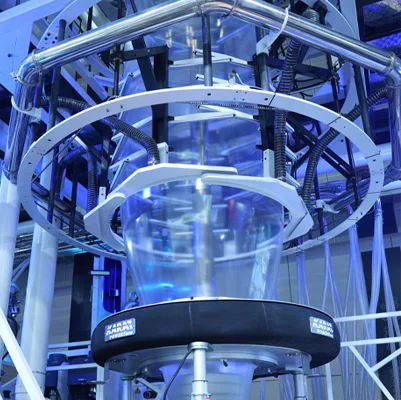
Hebei Chengheng Plastic Machinery Technology Co., Ltd. has reported a significant increase in domestic orders during the first half of 2026, a trend the company attributes directly to China’s ongoing “Action Plan for Promoting Large-Scale Equipment Renewal and Trading-In of Consumer Goods.” Announced by the State Council in March 2024 and reinforced through targeted provincial subsidies in 2025 and 2026, the policy encourages manufacturers to replace aging, energy-intensive machinery with high-efficiency alternatives.
According to data released by the China Machinery Industry Federation (CMIF) in April 2026, the output value of China’s plastics machinery sector rose 12.3% year-on-year in the first quarter, with energy-saving models accounting for nearly 60% of new sales. Chengheng, which specializes in multi-layer blown film extrusion lines and recycling pelletizing systems, says its domestic order volume between January and May 2026 climbed approximately 25% compared to the same period last year.
“We are seeing a clear shift,” said Li Wei, Sales Director at Chengheng. “Many of our customers, especially medium-sized film converters in Hebei and Shandong provinces, are using government-backed loans and tax deductions to replace their old mono-layer lines with our new three-layer ABA machines. The policy has shortened their return-on-investment horizon by at least 18 months, making the decision much easier.” Li noted that the ABA configuration’s ability to incorporate recycled content in the middle layer aligns with both cost-reduction goals and environmental guidelines issued by the Ministry of Ecology and Environment.
The equipment renewal policy is part of a broader effort by Beijing to stimulate fixed-asset investment while advancing carbon reduction targets. The National Development and Reform Commission (NDRC) estimates that replacing a 10-year-old blown film line with a modern high-efficiency alternative can reduce energy consumption per ton of output by up to 30%. Chengheng’s new lines are designed to meet Grade 1 energy efficiency standards under the revised GB 30200-2025 norm for plastics extrusion machinery, which took effect in January 2026.
Local governments are adding further incentives. Hebei Province, where Chengheng is headquartered, launched a special fund in March 2026 offering a 15% subsidy for manufacturers purchasing domestically produced intelligent plastics equipment. Chengheng has already assisted six clients in successfully applying for this subsidy.
“The policy environment is the strongest we have seen in a decade for upgrading plastics processing,” commented Zhang Lihua, an independent analyst covering China’s machinery sector. “Firms that can deliver compliant, high-efficiency machines quickly are capturing market share from slower competitors. Chengheng seems to be executing well on that front.”
The company plans to host a series of open-house events at its Hebei factory in the third quarter of 2026, specifically targeting processors still operating older equipment, to demonstrate the energy savings and output improvements achievable with policy-supported upgrades.
Sources:
State Council of China, “Action Plan for Promoting Large-Scale Equipment Renewal and Trading-In of Consumer Goods,” March 2024
China Machinery Industry Federation (CMIF), Q1 2026 Plastics Machinery Sector Briefing, April 2026
National Development and Reform Commission (NDRC), “Assessment of Energy Conservation Potential in Plastics Processing Equipment,” February 2026
GB 30200-2025, National Standard for Energy Efficiency in Plastics Extrusion Machinery
Hebei Provincial Department of Industry and Information Technology, “Special Fund Guidelines for Intelligent Manufacturing Equipment Subsidies,” March 2026
Statement from Li Wei, Sales Director, Hebei Chengheng Plastic Machinery Technology Co., Ltd.
Quoted commentary from Zhang Lihua, independent machinery sector analyst