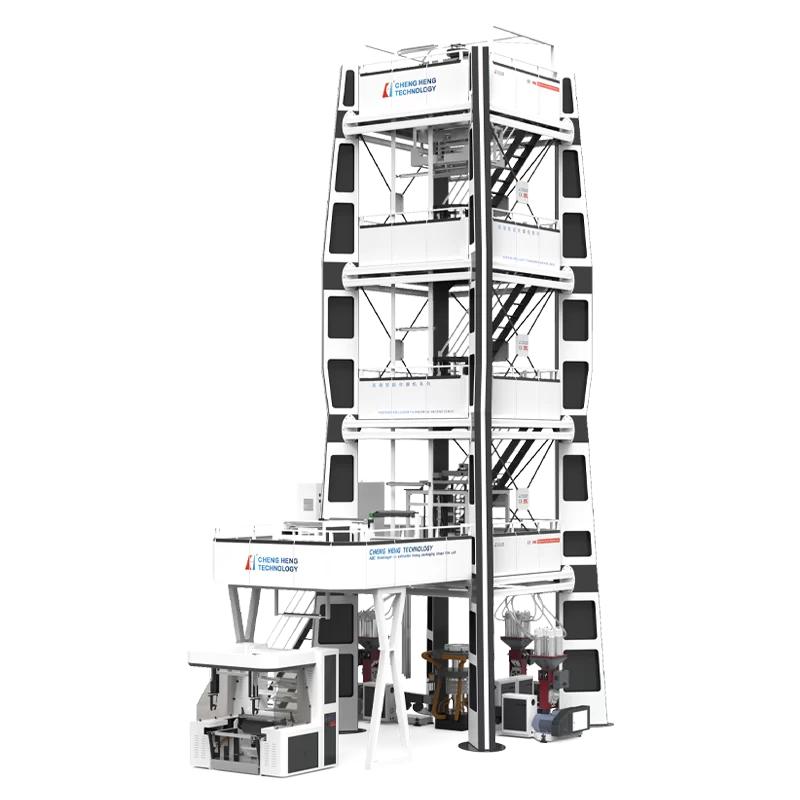

High Efficiency Blown Film Production Line Technical Guide
 By:Michael Thompson - September 29, 2026

How Advanced Blown Film Technology Supports PPWR Compliance
The European Union's Packaging and Packaging Waste Regulation (PPWR) is redefining how flexible packaging is designed, manufactured, and recycled. As the regulation promotes packaging that is recyclable, resource-efficient, and aligned with circular economy principles, manufacturers are facing increasing pressure to improve both product design and production processes.
For blown film producers, meeting these new expectations is no longer solely a question of material selection. Manufacturing precision, process stability, and intelligent automation have become equally important in producing high-quality recyclable films that comply with evolving market requirements.
As a result, investment in advanced blown film technology is accelerating across the global flexible packaging industry.
 By:Brian Wilson - July 23, 2026

Why Mono-Material PE Films Are Becoming the Future of Flexible Packaging
Flexible packaging is undergoing one of its most significant transformations in decades. As governments introduce stricter environmental regulations and global consumer brands strengthen their sustainability commitments, packaging design is increasingly shifting from complex multi-material structures to recyclable mono-material solutions.
Among these emerging formats, mono-material polyethylene (PE) films have become one of the industry's fastest-growing technologies. Their improved recyclability, compatibility with existing recycling streams, and continuously advancing performance have positioned them as a preferred solution for many food, personal care, household, and industrial packaging applications.
Recent implementation of the European Union's Packaging and Packaging Waste Regulation (PPWR), together with sustainability commitments from leading global brand owners, is accelerating this transition and encouraging investment throughout the flexible packaging value chain.
By:Michael Thompson - July 22, 2026

EU Packaging Regulation Accelerates Demand for Recyclable Plastic Films
The European packaging industry is entering a new phase of transformation following the continued implementation of the European Union's Packaging and Packaging Waste Regulation (PPWR). Designed to reduce packaging waste, improve recyclability, and strengthen the circular economy, the regulation is expected to reshape packaging design, material selection, and manufacturing processes across the plastics industry.
As brand owners, packaging converters, and manufacturers prepare for stricter sustainability requirements, demand for recyclable plastic films and advanced blown film production technologies is expected to increase significantly.
For companies throughout the flexible packaging supply chain, the PPWR represents not only a regulatory challenge but also an opportunity to accelerate innovation and improve long-term competitiveness.
 By:David Miller - July 20, 2026

Meta to Launch Its “Iris” AI Chip in September, Expanding AI Infrastructure and Accelerating Smart Manufacturing
Meta Platforms is preparing to take another major step in its artificial intelligence strategy with the planned production launch of its first large-scale in-house AI chip, code-named “Iris,” beginning in September 2026.
According to an internal company memo reviewed by Reuters, the new chip is part of Meta's long-term Meta Training and Inference Accelerator (MTIA) roadmap. The company aims to significantly expand its AI computing infrastructure, targeting 14 gigawatts of computing capacity by 2027, approximately doubling its expected capacity from 2026. The initiative is designed to improve AI performance while reducing dependence on third-party chip suppliers such as NVIDIA and AMD.
For manufacturers around the world, Meta's latest investment represents more than a technology announcement. It reflects a broader trend in which AI infrastructure is becoming a major driver of industrial investment, digital transformation, and intelligent manufacturing.
 By:Robert Chen - July 16, 2026

Global AI Wave Revs Up Asian Factories, Offsetting War-Induced Headwinds
The global manufacturing sector demonstrated remarkable resilience in June 2026 as strong demand driven by artificial intelligence (AI) technologies helped offset the economic pressure created by geopolitical tensions in the Middle East.
According to a Reuters report citing manufacturing surveys released on July 1, factory activity across several Asian economies continued to expand despite higher logistics costs, supply chain disruptions, and energy price volatility associated with the recent conflict in the Middle East. The report suggests that growing demand for AI-related products—including semiconductors, servers, data center equipment, and advanced computing hardware—has become a major engine supporting industrial production throughout the region.
For manufacturers serving industrial supply chains, including the plastics processing and packaging sectors, this trend signals that AI is influencing not only the technology industry but also the broader manufacturing ecosystem.
By:Michael Thompson - July 14, 2026

Global AI Investment Boom Accelerates Smart Manufacturing Across the Plastics Industry
A new wave of global investment in artificial intelligence (AI) is reshaping manufacturing industries around the world. While much of the public attention has focused on AI applications in data centers, semiconductors, and cloud computing, the impact is increasingly being felt on factory floors across multiple industrial sectors—including plastics processing and blown film production.
According to recent manufacturing surveys and market analyses, demand for AI-related technologies has become an important driver supporting industrial production in Asia, offsetting pressure from geopolitical uncertainty and higher logistics costs.
For plastic film manufacturers, this trend signals more than digital transformation—it marks a shift toward intelligent production systems capable of improving efficiency, quality, and sustainability.
By:David Miller - July 13, 2026

How AI Is Optimizing Blown Film Production and Reducing Material Waste
Artificial Intelligence (AI) is rapidly transforming manufacturing across a wide range of industries, and the plastic film sector is no exception. As manufacturers face rising raw material costs, stricter sustainability requirements, and increasing expectations for consistent product quality, AI-powered process optimization is emerging as a key competitive advantage.
In modern blown film production, AI is no longer viewed as a futuristic concept. Instead, it is becoming an important tool for improving production stability, reducing material waste, enhancing product quality, and supporting data-driven decision-making throughout the manufacturing process.
For film producers seeking greater operational efficiency, AI is helping shift production from reactive control to predictive and autonomous manufacturing.
 By:Kevin Davis - July 9, 2026

Mechanical vs. Chemical Recycling: Which Technology Will Lead the Next Decade?
The global plastics industry is undergoing a profound transformation as governments, brand owners, packaging producers, and consumers seek more sustainable solutions to address plastic waste. Recycling has become a cornerstone of this transition, yet significant debate remains regarding the most effective path forward.
For decades, mechanical recycling has served as the primary method for recovering plastic materials. More recently, chemical recycling technologies have attracted growing investment and attention due to their potential to process difficult-to-recycle plastic waste streams and produce high-quality recycled feedstocks.
As regulatory requirements tighten and demand for recycled-content packaging continues to rise, an important question emerges: which technology is best positioned to support the next generation of circular plastics manufacturing?
By:Robert Chen - July 7, 2026

Extended Producer Responsibility (EPR) Policies Gain Momentum Worldwide: A New Era for Sustainable Packaging
Extended Producer Responsibility (EPR) is rapidly becoming one of the most influential policy frameworks shaping the global packaging industry. By shifting the financial and operational responsibility for post-consumer packaging waste from governments to producers, EPR policies are encouraging manufacturers to redesign packaging, improve recyclability, and invest in circular economy solutions.
In 2026, EPR regulations are expanding across Europe, the United Kingdom, North America, and parts of Asia-Pacific. For plastic film manufacturers, packaging converters, and machinery suppliers, these developments represent not only new compliance obligations but also significant opportunities for technological innovation and market growth.
By:Robert Chen - July 7, 2026

Middle East Petrochemical Expansion Reshapes Global Polyethylene Supply
The Middle East has long been recognized as one of the world's most competitive petrochemical production hubs, benefiting from abundant hydrocarbon resources, integrated industrial infrastructure, and strategic access to international shipping routes. In 2026, however, the region is entering a new phase in which continued investment in large-scale petrochemical projects coincides with heightened geopolitical uncertainty.
For polyethylene (PE) producers, plastic film manufacturers, and packaging converters, these developments are reshaping the global supply landscape. While new production capacity promises long-term supply growth, short-term disruptions have highlighted the importance of supply chain resilience, manufacturing efficiency, and production flexibility.
By:David Miller - July 2, 2026

Smart Manufacturing Continues to Transform the Global Blown Film Industry
Digitalization and smart manufacturing technologies are becoming essential components of modern blown film production. As manufacturers seek higher efficiency and lower operating costs, intelligent automation is rapidly replacing traditional manual process control.
By:Michael Thompson - June 30, 2026