For many years, flexible packaging relied on laminated structures combining materials such as PET, PA, PE, aluminum foil, and EVOH to achieve excellent barrier properties, mechanical strength, and shelf-life performance.
While these structures have delivered outstanding product protection, they often present challenges at the end of their life cycle because separating different materials for recycling is technically difficult and economically costly.
As circular economy policies become more comprehensive, packaging manufacturers are under increasing pressure to design products that are easier to recycle without sacrificing functionality.
This challenge has encouraged significant innovation in mono-material film technology.
Mono-material PE packaging is designed to use polyethylene as the dominant material throughout the package structure, allowing the finished product to enter established polyethylene recycling streams more efficiently.
Compared with conventional multi-material laminates, mono-material PE films offer several important advantages:
Improved recyclability within existing collection systems
Simplified material sorting and processing
Reduced dependence on complex separation technologies
Better alignment with circular economy objectives
Potential reduction in overall environmental impact
Although not every application can currently be converted to mono-material structures, ongoing advances in resin technology and film engineering continue to expand their commercial viability.
Historically, one of the main limitations of mono-material PE packaging was achieving the same barrier performance as multi-layer laminated structures.
Today, material science is changing that equation.
Packaging manufacturers are increasingly combining advanced polyethylene resins, optimized co-extrusion technologies, functional coatings, and innovative film structures to enhance:
Mechanical strength
Seal integrity
Optical clarity
Puncture resistance
Moisture resistance
Processability
These innovations are allowing mono-material PE films to serve an expanding range of packaging applications while supporting improved recyclability.
Producing high-quality mono-material films requires greater manufacturing consistency than many conventional packaging structures.
Small variations in film thickness, cooling performance, or bubble stability can directly influence sealing behavior, mechanical performance, and downstream converting efficiency.
As a result, manufacturers are investing in intelligent blown film technologies capable of maintaining tighter process control.
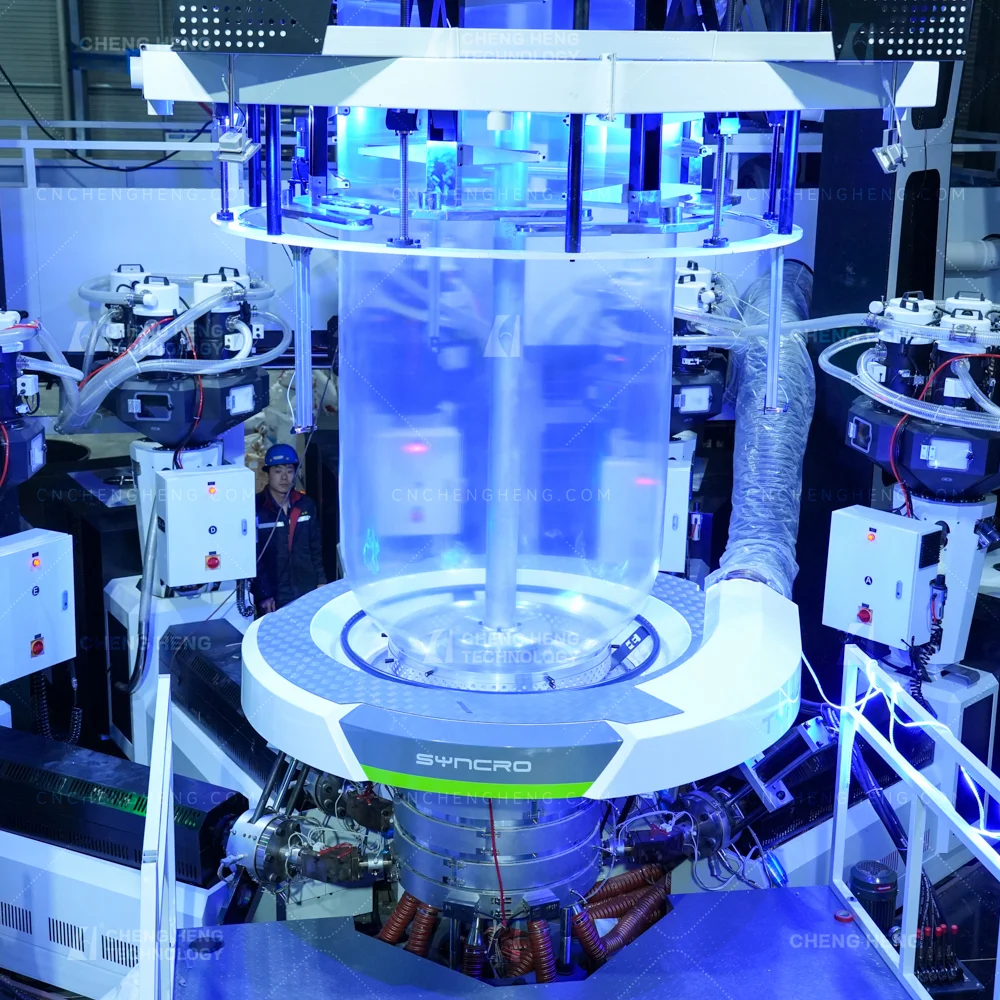
Advanced production systems integrating automatic air ring technology, online thickness measurement, and closed-loop profile control enable producers to achieve:
Superior thickness uniformity
Stable bubble control
Reduced startup waste
Improved resin utilization
Consistent product quality
These capabilities are becoming increasingly important as converters seek to meet demanding sustainability and performance expectations simultaneously.
Many multinational consumer goods companies have announced ambitious packaging sustainability targets that include increasing recyclability, reducing virgin plastic consumption, and expanding the use of recycled materials.
These commitments are encouraging packaging suppliers to redesign product portfolios around recyclable mono-material structures.
Retailers and brand owners are also collaborating with resin producers, film converters, machinery manufacturers, and recyclers to accelerate commercialization of next-generation recyclable packaging.
Although implementation timelines vary by region, the direction of the industry is becoming increasingly clear.
The transition toward mono-material PE packaging represents an important opportunity for blown film manufacturers.
Demand is expected to grow for production equipment capable of delivering:
Stable processing of advanced PE resins
Excellent gauge consistency
High-output production
Reduced material waste
Intelligent digital process control
Manufacturers that invest in precision extrusion technologies and advanced automation will be better positioned to support converters supplying international food, consumer goods, logistics, and industrial packaging markets.
Industry organizations expect mono-material flexible packaging to play an increasingly important role in achieving global circular economy objectives.
Future innovation is likely to focus on:
Recyclable high-barrier PE structures
Improved compatibility with recycled polyethylene
Advanced co-extrusion technologies
Digital quality management
AI-assisted process optimization
Lower-carbon manufacturing solutions
As regulations continue to evolve and brand owners pursue more sustainable packaging strategies, mono-material PE films are expected to become a cornerstone of future flexible packaging development.
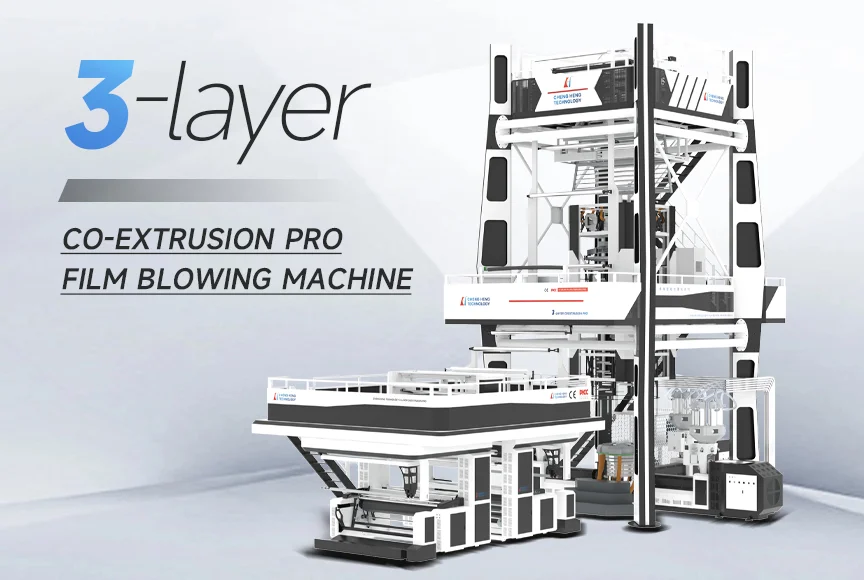
Hebei Chengheng Plastic Machinery Technology Co., Ltd. specializes in the development and manufacture of advanced blown film extrusion equipment, automatic air ring systems, online thickness measurement systems, and intelligent process control technologies.
By combining innovative engineering with practical manufacturing expertise, the company helps plastic film manufacturers improve production stability, enhance film quality, optimize material utilization, and support the production of recyclable mono-material packaging for global markets.
European Commission. Packaging and Packaging Waste Regulation (PPWR) – Official legislation and implementation guidance.
Packaging Europe. Industry coverage on mono-material flexible packaging and recyclable PE film innovations.
CEFLEX (Circular Economy for Flexible Packaging). Design guidelines for recyclable flexible packaging and mono-material polyethylene solutions.
Reuters. Coverage of European packaging sustainability initiatives and recyclable packaging market developments.