Stretch film is widely used throughout logistics and industrial supply chains to secure products during transportation and storage.
Traditionally, a roll of stretch film has generally been regarded as packaging material that becomes packaging when it is applied to a specific load.
The European Commission's August FAQ introduces a different interpretation for stretch wrap used to stabilize packaged products on pallets.
Under the example cited by ICIS, the film can already be considered packaging when it is sold on a roll, even though the roll is later cut and wrapped around a pallet.
The distinction may appear technical, but it can have important consequences for companies operating within the flexible packaging supply chain.
The question of when film becomes packaging is closely connected to responsibility under the PPWR.
If the film is considered finished packaging when it leaves the film producer, the film manufacturer could potentially face responsibilities associated with packaging placed on the market.
However, industry organizations argue that the final characteristics of transport packaging are determined when the film is actually applied to a specific load.
The wrapping operator determines factors such as:
The dimensions of the load
The quantity of film used
The number of wrapping layers
The pre-stretch ratio
The final packaging configuration
These variables cannot necessarily be determined by the film producer when the material is supplied on a roll.
The Commission's FAQ has prompted responses from several organizations representing the European flexible packaging industry.
The German Plastic Packaging Association (IK) requested that the Commission withdraw the stretch-film example and clarify the distinction between packaging material and finished packaging.
European Plastic Films (EuPF), a sector group representing European film producers, subsequently made a similar request on August 19. EuPF argued that film supplied on a roll should be treated as packaging material and that the final packaging is created when the film is applied to the load.
The organizations also point to a June 2026 explanation from the European National Registers for Packaging (EUNR), representing packaging registers and competent authorities from 16 EU member states.
According to ICIS, the EUNR position treats stretch, shrink, and cling films as packaging materials and indicates that packaging can reach its final form during the filling or application stage. Germany's Central Agency Packaging Register (ZSVR) has published a similar interpretation for rolled films, wrappers, and straps.
The disagreement is not simply a matter of terminology.
Different interpretations could potentially affect:
Producer registration
Packaging reporting
Compliance documentation
Extended Producer Responsibility obligations
Responsibility for demonstrating conformity
Packaging fees
Supply-chain documentation
ICIS reported that industry organizations are concerned that assigning the manufacturer role to the film producer could create obligations that the producer cannot fully control.
For example, certain packaging characteristics are determined only when the film is applied to the pallet, including the amount of material used and the wrapping configuration.
This could create additional administrative complexity for film manufacturers supplying multiple European markets.
The stretch-film debate illustrates a larger challenge created by increasingly detailed packaging regulations.
Modern flexible packaging supply chains involve multiple participants:
Resin producers → Film manufacturers → Converters → Packaging operators → Brand owners → Retailers → Consumers → Recycling systems
Each participant controls different parts of the packaging life cycle.
As regulations increasingly focus on recyclability, material efficiency, traceability, and producer responsibility, clearly defining where responsibility begins and ends becomes increasingly important.
For film producers, regulatory compliance is therefore becoming closely connected with technical documentation and supply-chain communication.
Although the current debate is primarily regulatory, it also highlights the importance of manufacturing consistency.
Stretch film performance depends on precise control of several production parameters, including:
Film thickness
Mechanical strength
Elongation
Puncture resistance
Stretch characteristics
Thickness distribution
Inconsistent film properties can increase material consumption or affect the efficiency of pallet stabilization.
For producers supplying demanding European markets, improving production precision can therefore support both product performance and resource efficiency.
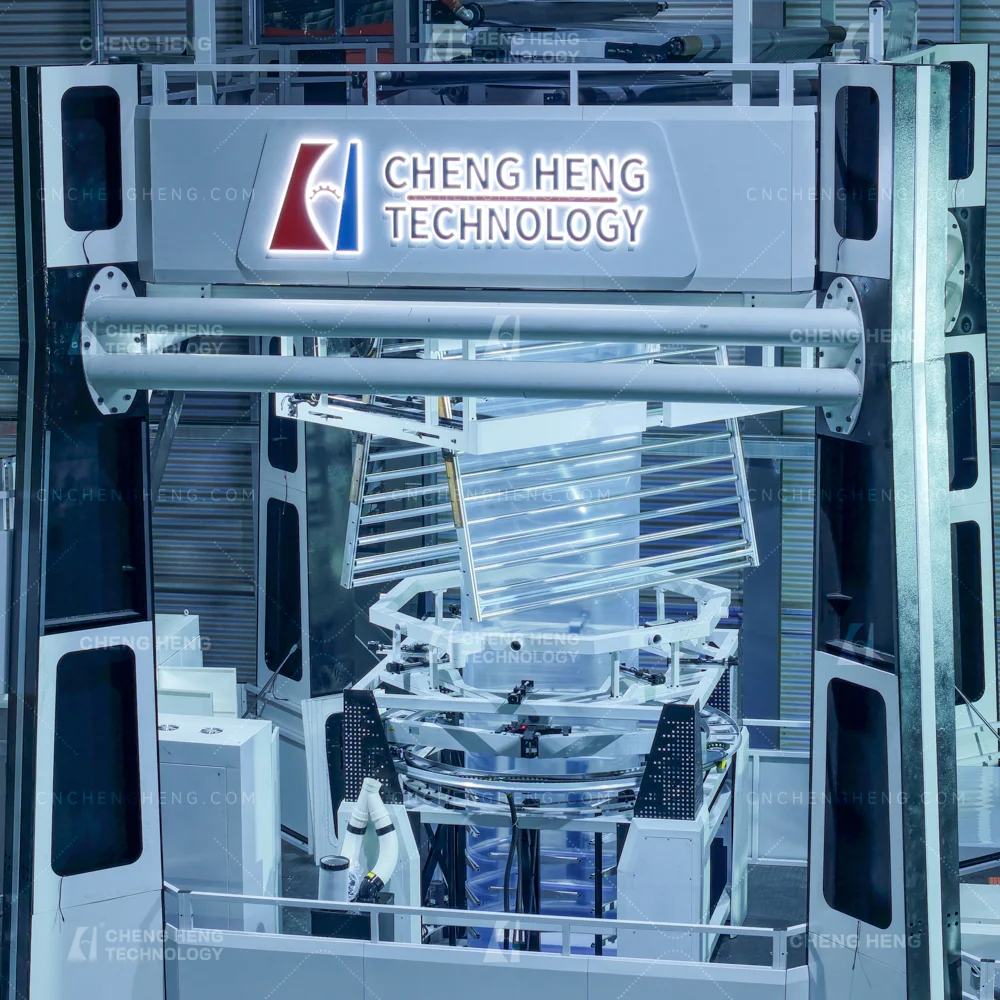
Modern blown film technologies can help producers improve consistency while reducing unnecessary material consumption.
Online thickness measurement systems continuously monitor film gauge and provide real-time information about thickness distribution.
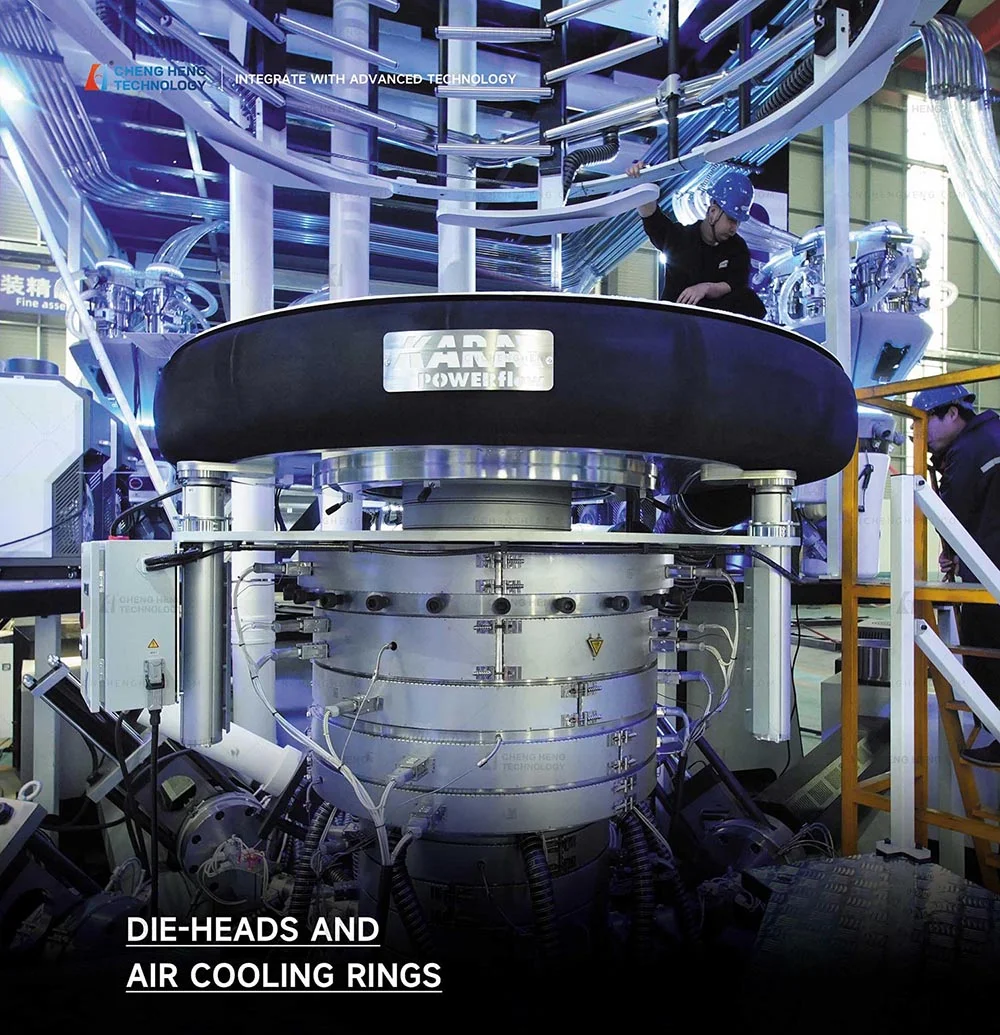
Automatic air ring systems can improve cooling stability around the film bubble, supporting more uniform film properties.
Advanced process-control systems can further integrate production data to help operators maintain stable extrusion conditions.
Together, these technologies can contribute to:
More consistent film thickness
Lower material consumption
Reduced production waste
Improved production stability
Better quality documentation
For flexible packaging producers facing increasingly detailed sustainability and compliance requirements, these improvements can become important competitive advantages.
The stretch-film discussion comes at a significant moment for the European packaging industry.
The PPWR began applying across the European Union on August 12, 2026. The European Commission describes the regulation as a framework intended to reduce packaging waste, improve recycling, strengthen the market for secondary raw materials, and harmonize packaging requirements across the EU.
The Commission published its updated PPWR FAQ on August 3 to support businesses, authorities, and other stakeholders in interpreting the regulation.
However, the ongoing industry response to the stretch-film example demonstrates that practical implementation may continue to generate questions even after the regulation begins to apply.
For flexible packaging manufacturers, several issues will be worth monitoring as PPWR implementation develops:
Additional clarification may be needed to resolve differences between the Commission's FAQ and interpretations published by national packaging authorities and industry organizations.
Film producers and customers may need to establish clearer arrangements concerning documentation, registration, and conformity information.
As packaging regulations become more sophisticated, manufacturers may need stronger systems for maintaining production and material information.
Reducing unnecessary material consumption will remain an important objective as European packaging policy moves toward greater resource efficiency.
The current stretch-film debate demonstrates that PPWR compliance will involve more than simply changing packaging materials.
Manufacturers will need to understand regulatory definitions, monitor implementation guidance, maintain accurate documentation, and work closely with customers throughout the supply chain.
At the same time, technological improvements remain essential.
More precise extrusion, better thickness control, stable cooling, reduced scrap, and digital production monitoring can help film manufacturers respond to both regulatory and commercial pressures.
As the European flexible packaging market adapts to the PPWR, companies that combine regulatory awareness with advanced manufacturing capabilities may be better positioned to compete in the evolving market.
Hebei Chengheng Plastic Machinery Technology Co., Ltd. specializes in the research, development, and manufacture of blown film extrusion equipment, automatic air ring systems, online thickness measurement systems, and intelligent process-control technologies.
The company is committed to helping plastic film manufacturers improve production stability, optimize material utilization, enhance film quality, and adapt to changing requirements in international packaging markets.
1. ICIS
PPWR stretch-wrap guidance exposes contradictions over when film becomes packaging — August 7, 2026.
2. ICIS
Film groups renew calls for European Commission to amend PPWR stretch-wrap guidance — August 20, 2026.
3. European Commission — Directorate-General for Environment
FAQ on Packaging and Packaging Waste Regulation (PPWR) — August 3, 2026.
4. European Commission — Directorate-General for Environment
New EU rules on packaging enter into application — August 11, 2026.
5. European Plastic Films (EuPF)
Film on a roll is not yet packaging — EuPF asks the Commission to correct its PPWR FAQ — August 19, 2026.