The PPWR establishes binding requirements for all packaging placed on the EU market, regardless of origin. Key regulatory directions include:
Mandatory recyclability requirements by 2030
Minimum recycled content targets for plastic packaging
Restrictions on excessive and unnecessary packaging
Expansion of reuse and refill systems
Standardized labeling and traceability systems
These measures aim to accelerate the transition toward a circular packaging economy and reduce dependency on virgin fossil-based plastics.
Flexible packaging and plastic film producers are among the most affected sectors. The regulation is driving increased demand for:
Mono-material film structures
High-precision thickness control
Improved material efficiency
Recyclable multi-layer co-extrusion films
For film extrusion manufacturers, production stability and consistency have become critical performance indicators.
To meet stricter packaging standards, manufacturers are increasingly adopting advanced extrusion technologies, including:
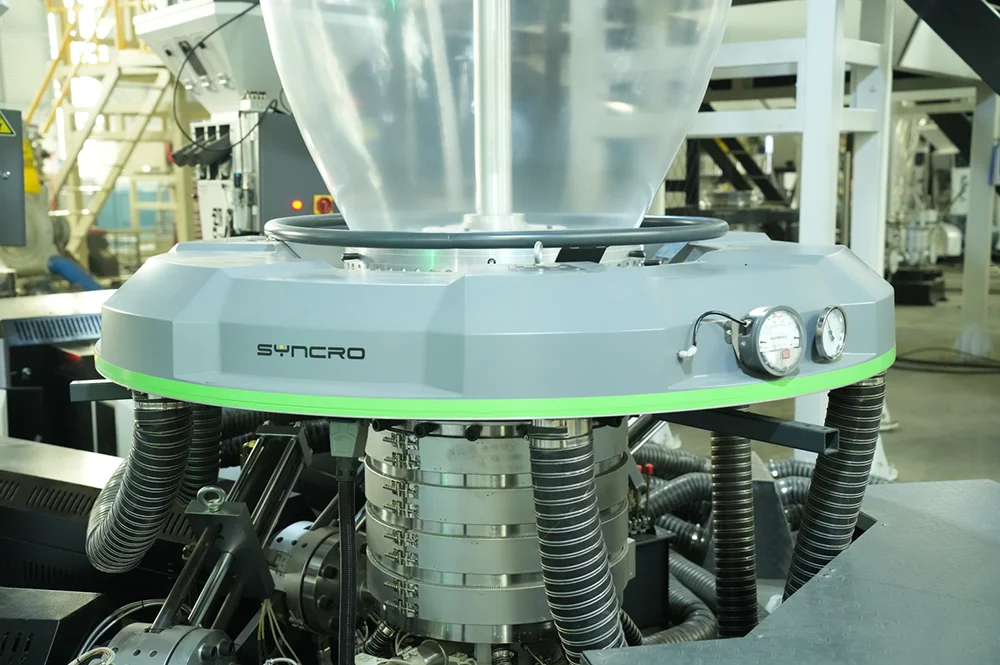
Automatic air ring systems for bubble stability
Online thickness measurement systems for real-time quality control
Intelligent closed-loop process adjustment
Energy-efficient multi-layer extrusion lines
These technologies help reduce material waste while improving film uniformity and recyclability performance.
The PPWR is not only a regional regulation but a global benchmark influencing packaging design strategies worldwide. Manufacturers investing in advanced process control technologies are expected to maintain stronger competitiveness in the evolving regulatory environment.
European Commission – Packaging and Packaging Waste Regulation (PPWR)
EUR-Lex Regulation (EU) 2025/40
Packaging Europe Industry Analysis (2026)