Recent reports indicate that strong investment in AI infrastructure—including data centers, semiconductor production, industrial automation, and intelligent software—is becoming a major contributor to manufacturing growth.
Growing demand for AI hardware has stimulated broader industrial activity throughout the manufacturing supply chain, encouraging companies to modernize production equipment and adopt more advanced digital technologies.
This investment cycle is expected to continue as governments and private enterprises accelerate their digital transformation strategies.
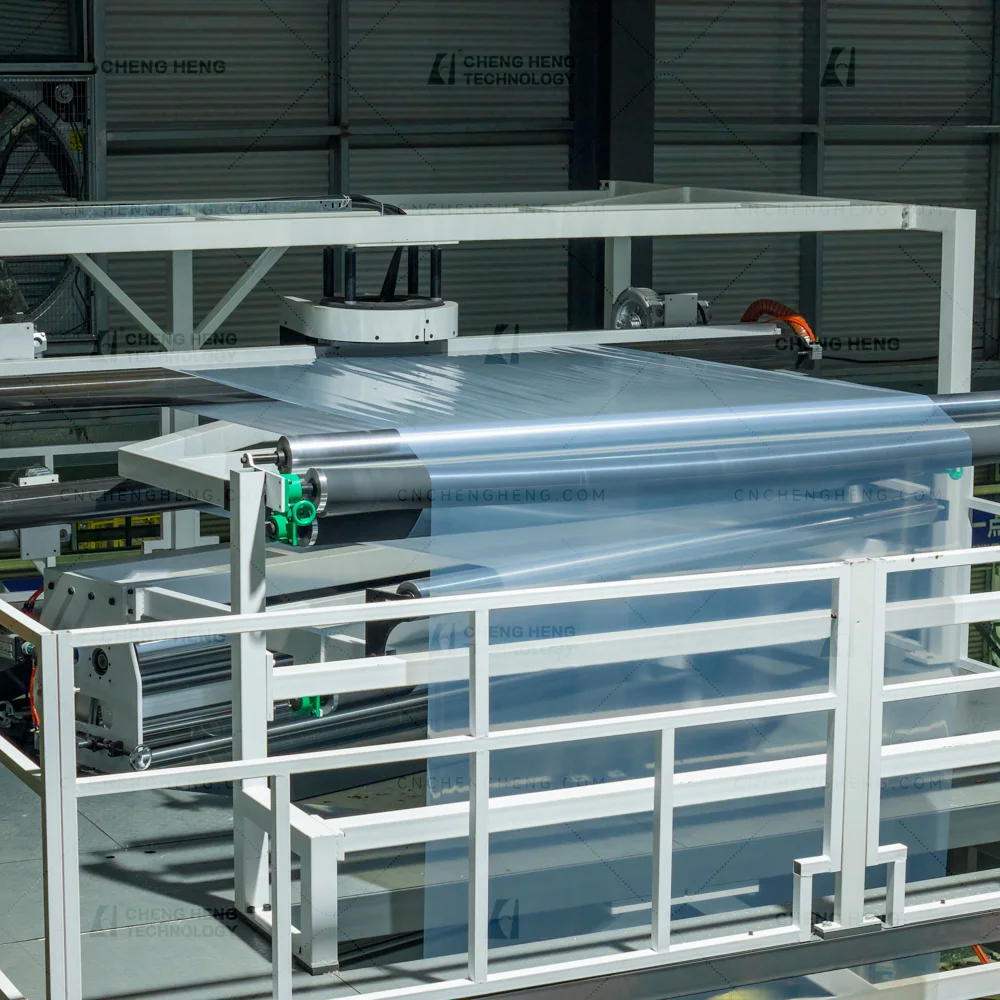
Although plastic film manufacturing is not directly part of the AI sector, it is increasingly benefiting from technologies originally developed for intelligent manufacturing.
Today's advanced blown film production lines generate large volumes of operational data from sensors, drives, and quality control systems.
AI-powered software can analyze this information to identify production patterns, optimize processing parameters, and reduce operational variability.
Applications include:
Predictive maintenance
Automatic process optimization
Intelligent quality inspection
Energy consumption analysis
Real-time production monitoring
Raw material costs remain one of the largest operating expenses in blown film production.
By continuously monitoring process stability and predicting quality deviations before defects occur, AI systems help reduce:
Startup waste
Bubble instability
Thickness variation
Unplanned downtime
Off-specification products
These improvements contribute directly to lower production costs while supporting sustainability objectives.
Industry experts increasingly view AI as an enabling technology rather than a replacement for skilled operators.
Future production facilities are expected to combine:
Automatic air ring systems
Online thickness measurement
Digital twins
Manufacturing execution systems
AI-assisted decision support
The integration of these technologies will allow manufacturers to achieve higher productivity while maintaining consistent product quality.
The global AI investment boom is expected to continue influencing manufacturing over the coming years.
For the plastics processing industry, the opportunity lies not in producing AI hardware but in applying AI technologies to build smarter, more efficient, and more sustainable production systems.
Manufacturers that embrace intelligent automation today will be better prepared to compete in tomorrow's increasingly digital industrial landscape.
Hebei Chengheng Plastic Machinery Technology Co., Ltd. specializes in advanced blown film extrusion equipment, automatic air ring systems, online thickness measurement systems, and intelligent process control solutions.
The company is committed to helping customers improve production efficiency, product consistency, and sustainable manufacturing performance through continuous technological innovation.
Reuters. Global AI wave revs up Asian factories, offsetting war-induced pain. July 1, 2026.
Reuters. U.S. factory production flat in May; AI investment supporting manufacturing. June 15, 2026.
2026 Roadmap on Artificial Intelligence and Machine Learning for Smart Manufacturing. International research roadmap on AI-enabled manufacturing.