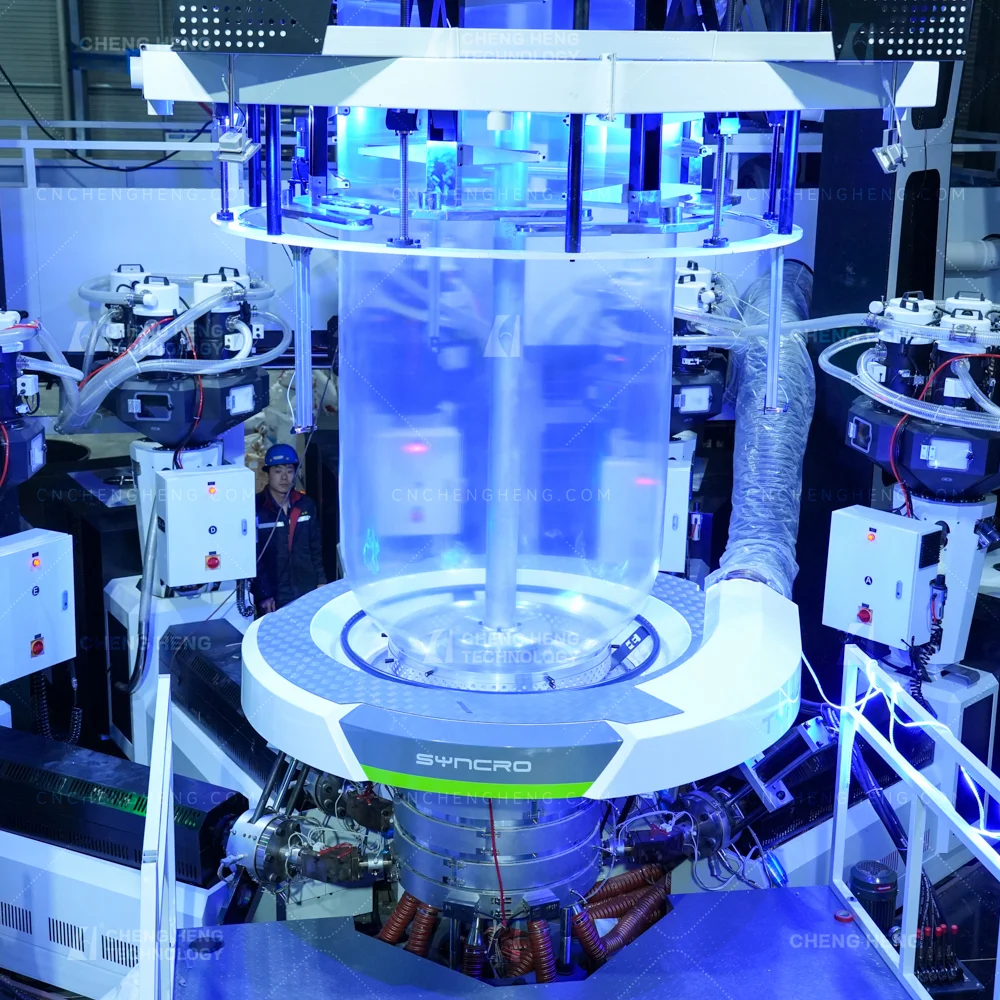
How Does a Single Screw Plastic Extruder Machine Work?
A single screw plastic extruder converts plastic pellets into a continuous molten stream through a combination of mechanical shear and thermal energy.
The process begins when raw materials enter the hopper and are fed into the heated barrel. Inside the barrel, a rotating screw transports, compresses, melts, and homogenizes the material before pushing it through the die head to form the desired product.
The screw is generally divided into three functional sections:
Transports plastic pellets from the hopper into the barrel.
Compacts and melts the material while removing trapped air.
Creates a uniform melt and stable pressure before extrusion.
This design ensures consistent output quality and efficient material utilization.

The performance of an extrusion system depends largely on the quality of its core components.
Provides continuous material feeding.
The heart of the machine, responsible for conveying, melting, and mixing polymer materials.
Maintains precise temperature profiles throughout the extrusion process.
Deliver stable torque and rotational speed.
Shapes the molten polymer into film, sheet, pipe, or profile products.

Single screw extrusion technology is widely used across various industries.
Shopping bags
Garbage bags
Packaging film
Agricultural film
Water pipes
Irrigation pipes
Conduit pipes
Plastic sheets
Decorative profiles
Industrial profiles
Reprocessed PE
Recycled PP
PCR materials
| Feature | Single Screw Extruder | Twin Screw Extruder |
|---|---|---|
| Investment Cost | Lower | Higher |
| Maintenance | Simple | More Complex |
| Energy Consumption | Lower | Higher |
| Mixing Capability | Good | Excellent |
| Film Production | Excellent | Good |
| Compound Processing | Limited | Excellent |
For most film blowing applications, a single screw plastic extruder offers the best balance between productivity, energy efficiency, and investment cost.
Selecting the proper machine depends on several factors.
LDPE
HDPE
LLDPE
PP
Recycled Plastics
Common screw diameters include:
| Screw Diameter | Typical Output |
|---|---|
| 45 mm | 25–40 kg/h |
| 55 mm | 40–70 kg/h |
| 65 mm | 60–120 kg/h |
| 75 mm | 100–180 kg/h |
| 90 mm | 150–250 kg/h |
Different applications require different screw designs and die configurations.
Modern extrusion systems are becoming increasingly intelligent and energy-efficient.
Key industry trends include:
Industry 4.0 integration
Automatic thickness control
Energy-saving drive systems
Recycled material processing
Biodegradable polymer applications
Remote monitoring and predictive maintenance
Manufacturers investing in advanced extrusion technology can significantly improve productivity while reducing operational costs.
The single screw plastic extruder machine continues to be the backbone of plastic processing industries worldwide. Its proven reliability, low operating cost, and versatile application range make it an ideal solution for film production, pipe extrusion, sheet manufacturing, and recycling operations.
By choosing the right screw configuration, temperature control system, and machine capacity, manufacturers can achieve higher production efficiency, improved product quality, and long-term profitability.
For businesses seeking dependable extrusion solutions, investing in a high-quality single screw plastic extruder is a strategic step toward sustainable growth and competitive manufacturing performance.