The rapid adoption of generative AI has dramatically increased demand for high-performance computing resources.
Major technology companies are investing billions of dollars in:
AI data centers
Custom semiconductor development
High-bandwidth memory
Optical networking infrastructure
Advanced cooling technologies
Reuters reports that Meta expects to invest as much as US$145 billion in AI infrastructure during 2026 while expanding its computing network to support future generations of AI models. The company is working with Broadcom on chip design and TSMC on manufacturing, illustrating the increasingly integrated nature of the global semiconductor supply chain.
This level of investment highlights how AI infrastructure has become a strategic asset comparable to traditional manufacturing capacity.
Although Meta operates in the digital technology sector, its investment is expected to create opportunities far beyond cloud computing.
The construction and expansion of AI infrastructure requires:
Industrial equipment
Precision manufacturing systems
Electronic components
Protective packaging materials
Logistics and transportation solutions
Engineering plastics
As a result, manufacturers supplying these industries—including plastics processors and packaging producers—are likely to benefit from increasing industrial demand.
Many suppliers are already expanding production capacity while upgrading manufacturing equipment to meet higher quality and productivity requirements.
The same technologies driving AI infrastructure are also transforming factory operations.
Manufacturers are increasingly adopting digital production systems capable of collecting and analyzing operational data in real time.
In the blown film industry, intelligent manufacturing technologies include:
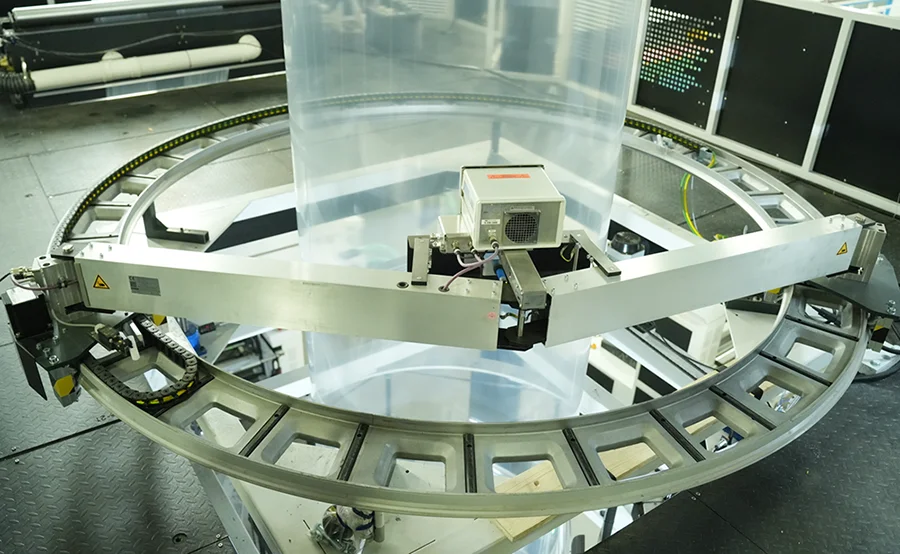
Automatic air ring systems
Online thickness measurement systems
Closed-loop profile control
Intelligent temperature management
Predictive maintenance software
These solutions help manufacturers reduce production variability while improving operational efficiency.
As AI technologies continue to mature, production systems are expected to become increasingly autonomous, allowing factories to optimize processes with minimal manual intervention.
Growing investment in AI infrastructure is expected to increase demand for a variety of plastic film products.
Protective packaging used for electronic components, semiconductor equipment, servers, communication hardware, and logistics applications requires films with excellent mechanical performance and highly consistent quality.
Meeting these requirements depends not only on raw materials but also on manufacturing precision.
Stable extrusion processes, accurate thickness control, efficient cooling systems, and automated quality monitoring enable manufacturers to produce high-performance films while minimizing material waste.
Consequently, investment in intelligent extrusion equipment is becoming an important strategy for companies seeking to serve advanced manufacturing industries.
Meta's decision to manufacture its own AI accelerator illustrates a broader transformation taking place throughout global manufacturing.
Rather than relying exclusively on external technology suppliers, leading companies are increasingly developing customized hardware optimized for their own applications.
This trend is expected to stimulate continued investment across semiconductor manufacturing, industrial automation, and intelligent production equipment.
For the plastics processing industry, the message is equally clear: future competitiveness will depend not only on production capacity, but also on digitalization, automation, and data-driven process optimization.
Manufacturers that embrace intelligent manufacturing technologies today will be better positioned to support the next generation of global industrial development.
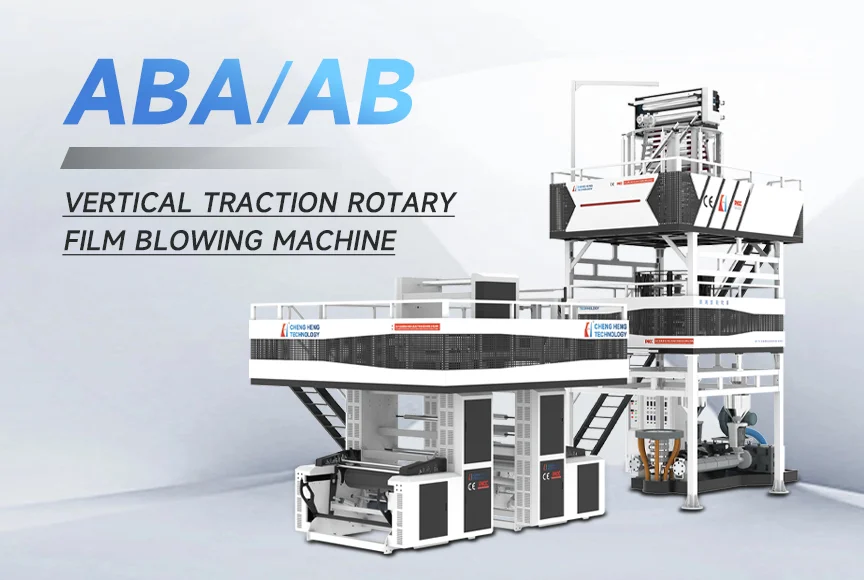
Hebei Chengheng Plastic Machinery Technology Co., Ltd. specializes in the research, development, and manufacture of advanced blown film extrusion equipment, automatic air ring systems, online thickness measurement systems, and intelligent process control technologies.
By combining engineering expertise with continuous innovation, the company provides reliable solutions that help film manufacturers improve product quality, increase production efficiency, reduce material waste, and support the transition toward smart manufacturing.
Reuters. "Meta to put AI chip into production in September as it looks to double computing capacity, memo shows." Published July 9, 2026.
Reuters / Investing.com. "Meta to put AI chip into production in September as it looks to double computing capacity."
Data Center Dynamics. "Meta could start production of Iris AI chip in September – report."