Price is only part of the problem.
For packaging manufacturers, recycled material must also meet requirements for quality, consistency, traceability and availability.
Virgin polymers generally offer highly predictable properties from batch to batch. Recycled materials, by contrast, can vary depending on collection systems, sorting efficiency, contamination levels, color and the composition of the waste stream.
These variations can become particularly important in film production.
For flexible packaging manufacturers, changes in recycled resin quality may influence melt processing behavior, mechanical properties, film appearance, thickness consistency and the overall stability of the extrusion process.
As a result, simply increasing the percentage of recycled material in a film structure is not necessarily a straightforward material-substitution exercise.
The timing of the issue is particularly important.
The EU’s PPWR entered into application across the European Union on August 12, 2026. The regulation establishes a broader framework for reducing packaging waste, improving recyclability and increasing the circular use of materials. Some of the most significant recycled-content requirements are scheduled for 2030.
This means packaging producers have several years to prepare—but qualification of recycled materials, supplier development, packaging redesign and production optimization cannot necessarily be completed at the last minute.
For companies selling packaging into Europe, recycled-content sourcing is therefore becoming a strategic supply-chain issue rather than simply a sustainability initiative.
Despite the current difficulties, the long-term direction of the PCR market remains positive.
Smithers forecasts that the global PCR packaging market will grow from approximately 4.9 million tonnes in 2026 to 6.5 million tonnes by 2031, representing a compound annual growth rate of about 5.7% by volume. Europe remains one of the most established markets, supported by regulatory requirements such as PPWR and the Single-Use Plastics Directive.
However, market growth alone may not be sufficient.
The industry needs additional recycling capacity, better collection and sorting systems, improved material quality and more stable demand from packaging manufacturers.
For flexible packaging in particular, the supply challenge could become increasingly important.
Flexible plastic packaging is one of the areas where recycled-content targets can be technically challenging.
Many flexible packaging structures are designed around specific combinations of barrier properties, sealing performance, stiffness, strength and processability. Introducing PCR materials can therefore require careful adjustment of the material structure and processing conditions.
A June 2026 CEFLEX analysis estimated that approximately 2.5 million tonnes of post-consumer recyclate derived from flexible packaging could be required by 2030 to meet PPWR recycled-content targets for flexible packaging. The analysis also estimated that an additional 440,000 tonnes per year would need to move into applications between 2025 and 2035.
This highlights an important point:
The challenge is not simply recycling more plastic. The recycled material must also reach suitable applications at the right quality, price and scale.
For plastic film manufacturers, the changing recycled-material market could influence production strategies in several ways.
Film producers may need to qualify multiple PCR suppliers and establish clearer specifications for recycled PE, PP and other polymers.
Consistent melt flow, contamination levels, moisture, color and mechanical properties can become increasingly important when recycled content is incorporated into film structures.
As recycled materials vary more than virgin polymers, extrusion systems may need to provide greater process flexibility.
Stable temperature control, accurate feeding, optimized extrusion parameters and effective cooling can help manufacturers maintain consistent film quality when material characteristics change.
When recycled resin is expensive or supply is limited, reducing unnecessary material consumption becomes increasingly valuable.
Film manufacturers are therefore likely to focus not only on recycled content, but also on thinner structures, better thickness control and optimized material distribution.
The objective is not simply to use more recycled polymer. It is to achieve the required packaging performance with the most efficient use of available resources.
Co-extrusion technology can provide manufacturers with additional options for incorporating different material grades into a film structure.
Instead of requiring every layer to use the same material, producers can design structures in which individual layers perform different functions.
This may become increasingly relevant as packaging companies attempt to balance recycled content, mechanical performance, barrier properties and cost.
The current PCR market demonstrates that sustainability targets cannot be separated from manufacturing economics.
If recycled materials remain expensive and inconsistent, packaging producers will need better process control and material utilization to make higher recycled content commercially viable.
This creates opportunities for continued development in extrusion technology, including:
More precise material dosing
Better melt temperature control
Improved automatic thickness control
More stable cooling and air-ring systems
Advanced process monitoring
Better integration of recycled and virgin material streams
For blown film manufacturers, these technologies can become increasingly important as the industry moves toward more complex material combinations and tighter quality requirements.
The European market is entering a period in which regulation is creating stronger demand for recycled materials, while market economics are still making those materials difficult to adopt at scale.
The result is a gap between regulatory ambition and commercial reality.
The PPWR is creating a clear long-term direction for packaging circularity, but meeting the 2030 targets will require more than regulatory pressure. The market will also need economically viable recycling capacity, reliable PCR supply, improved collection systems and packaging technologies capable of processing recycled materials efficiently.
In other words, Europe’s recycled-plastic challenge is becoming both a materials problem and a manufacturing problem.
Over the coming years, several developments will be particularly important:
Whether PCR prices become more competitive with virgin polymers
Whether European recycling capacity expands quickly enough
How consistently recycled PE and PP can be supplied
How PPWR recycled-content requirements are implemented
Whether brand owners increase long-term demand commitments
How film producers adapt extrusion processes for higher recycled content
Whether improved sorting and recycling technologies can increase the supply of high-quality PCR
The direction is clear: recycled content will play a larger role in European packaging.
The more difficult question is whether the market can produce enough affordable, high-quality and consistent recycled material to support that transition.
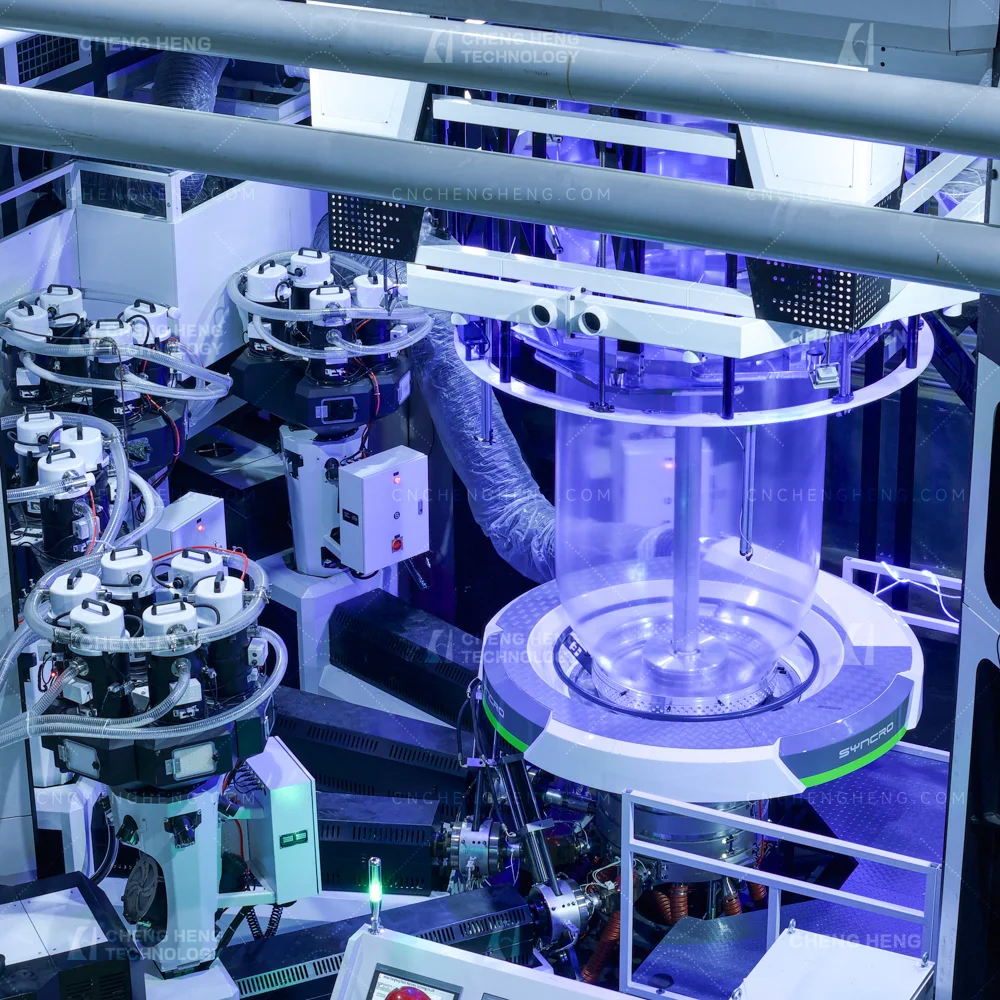
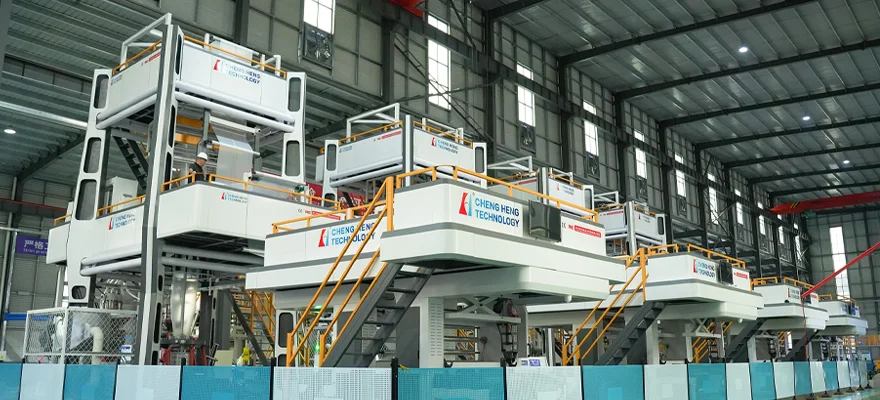
Hebei Chengheng Plastic Machinery Technology Co., Ltd. focuses on plastic film extrusion technology and provides blown film equipment for flexible packaging manufacturers.
As recycled materials become an increasingly important part of the packaging industry, extrusion equipment will play an important role in helping manufacturers achieve stable film quality while working with more diverse material combinations.
The company continues to focus on extrusion technology, process stability and intelligent production solutions for film manufacturers adapting to the changing global packaging market.
Plastics Information Europe — August 18, 2026
“High recyclate prices inhibit demand, restrict supply / Use of recycled content falling behind what is needed for 2030 targets.”
Smithers — March 31, 2026
The Future of PCR Packaging to 2031. The study examines the global PCR packaging market, recycled-material costs, supply constraints and the gap between current growth and 2030 legislative requirements.
Smithers — May 2026
“Global PCR Packaging Market to Reach 6.5 Million Tonnes by 2031.” The research provides market estimates and identifies cost, recyclate shortages and contamination as major barriers to PCR adoption.
CEFLEX — June 17–18, 2026
Research on recycled-content demand in flexible packaging, including the estimated requirement for approximately 2.5 million tonnes of flexible-packaging-derived PCR by 2030.
European Commission / Reuters — August 11–12, 2026
Coverage of the EU Packaging and Packaging Waste Regulation entering its application phase and its longer-term packaging waste and recyclability requirements.