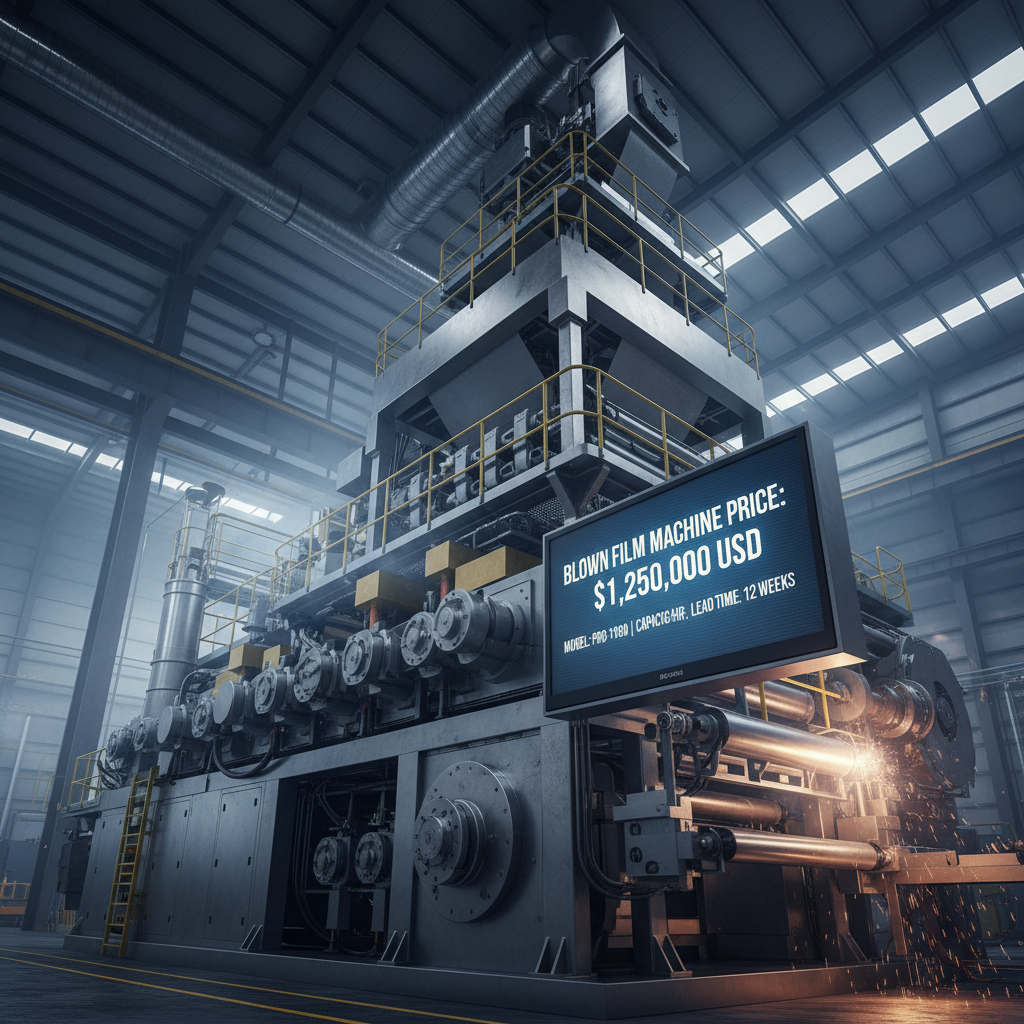
High Efficiency Dual Head Blown Film Production Line for PE Bags
Optimizing throughput in plastic packaging often requires a balance between equipment footprint and output volume. For manufacturers producing small-width LDPE or HDPE films, the double head extrusion system offers a strategic advantage by utilizing a single screw cylinder to feed two independent die heads. This configuration is specifically engineered for high-efficiency production of T-shirt bags, rolling bags, and various shopping bags, allowing operators to maximize their workshop area without sacrificing versatility.
By integrating dual traction and winding systems into one frame, this specialized blown film production line reduces energy consumption and labor costs compared to running two separate machines. Whether you are targeting food-grade packaging or industrial-grade wraps, the ability to run different widths or materials simultaneously ensures that diverse order requirements are met with minimal downtime and maximum resource utilization.

Engineering Precision in Dual-Head Extrusion Technology
The technical core of this machinery lies in its high-performance extrusion system. Both the cylinder and the screw are constructed from premium alloy steel, subjected to a rigorous nitration process and precision finishing. This ensures maximum hardness and superior corrosion resistance, which is critical when processing recycled materials or additives like CaCO3 that can be abrasive to standard steel components.
Unlike single-output systems, the dual-die architecture is scientifically designed to distribute melt pressure evenly across two heads. This allows for the simultaneous production of two separate film rolls. The operational efficiency is further enhanced by the shared power system, including the main power supply and cooling water pumps, which significantly lowers the initial equipment acquisition cost and long-term maintenance overhead.
- Alloy Steel Construction: Nitrated components for extended wear life.
- Shared Resource Architecture: Reduced energy footprint through integrated cooling and power.
- Independent Head Operation: Capability to perform maintenance on one head while the other continues production.

Operational Flexibility for Diverse Packaging Requirements
Modern packaging markets demand rapid switching between different product specifications. The twin-head configuration addresses this by allowing the production of two films with varying widths and thicknesses simultaneously. For example, a facility can produce thin, high-clarity food-grade PE film on one side and heavier, industrial-grade PE film on the other, effectively doubling the variety of a single production run.
This adaptability is essential for small-to-medium enterprises that handle a wide array of custom orders. By reducing the need for frequent machine changeovers, manufacturers can significantly decrease material waste during the start-up phase. The system's compatibility with HDPE, LDPE, LLDPE, and recycled resins makes it a versatile asset for those operating within a circular economy framework.
Furthermore, the compact design saves over 50% of the workshop space compared to installing two separate single-head units. This spatial efficiency allows companies to scale their capacity within existing facility limits, avoiding the capital expenditure associated with building expansion.
Strategic Selection Criteria for Plastic Film Machinery
When evaluating a blown film production line, buyers must consider the relationship between screw diameter, output capacity, and the specific characteristics of the raw material. A larger screw diameter, such as the Φ65 option, provides the necessary torque and melt capacity for higher output rates, reaching up to 120kg/h, which is ideal for high-volume shopping bag production.
The L/D ratio of the screw (32:1 with force feeding) is another critical factor. A higher ratio generally allows for better homogenization of the polymer melt, resulting in more consistent film thickness and improved mechanical properties of the final bag. Buyers should also verify the precision of the die diameter to ensure the resulting bubble stability is sufficient for the target film width.
Beyond technical specs, the availability of professional technical support is paramount. Expert guidance on configuring the machine based on specific raw material characteristics—such as the inclusion of CaCO3 for cost reduction—can be the difference between a high-scrap rate and a streamlined, profitable operation.
Technical Specifications and Model Comparison
| Model | Film Width (mm) | Output Range (kg/h) | Main Motor (kw) |
|---|---|---|---|
| 50-500 | 150-300mm | 25-90kg/h | 15kw |
| 55-600/700 | 200-400/500mm | 30-100kg/h | 22kw |
| 65-700 | 300-550mm | 40-120kg/h | 37kw |
| Material Compatibility | HDPE/LDPE/LLDPE | Recycling/CaCO3 | Application-specific |
| Screw L/D Ratio | 32:1 | Force Feeding | High Precision |
Integrating Sustainable Materials into the Extrusion Process
The shift toward sustainable packaging has increased the demand for machinery capable of handling recycled resins and biodegradable additives. This dual-head system is specifically designed to accommodate recycling materials and CaCO3, which helps manufacturers lower raw material costs while reducing the environmental impact of their plastic production.
However, processing recycled materials often introduces inconsistencies in melt flow. To counter this, the use of high-quality alloy steel in the screw and cylinder is non-negotiable. The nitration treatment provides the necessary hardness to resist the abrasive nature of recycled pellets, ensuring that the film's surface remains smooth and free of gels or streaks.
By optimizing the temperature profiles across the dual-head system, operators can maintain a stable bubble even when using a blend of virgin and recycled PE. This capability allows brands to market "eco-friendly" packaging lines without sacrificing the structural integrity or appearance of the final product.
Optimizing Workshop ROI through Equipment Synergy
Achieving a high Return on Investment (ROI) in the plastics industry requires minimizing downtime and maximizing the output per square meter of factory space. The integrated nature of the twin-head system directly contributes to this by eliminating the need for dual sets of heavy electrical installations and separate cooling circuits.
For procurement managers, the value proposition extends to labor efficiency. A single experienced operator can manage two production streams simultaneously, reducing the payroll cost per kilogram of film produced. When combined with the energy savings from shared motor and pump systems, the operational expenditure (OPEX) is significantly lower than that of two independent machines.
To ensure long-term reliability, it is recommended to implement a preventive maintenance schedule focusing on the screw-cylinder interface and the die head cleaning. Given the shared nature of the extrusion unit, keeping the system clean prevents cross-contamination between the two heads, ensuring that different material grades remain pure.
Frequently Asked Questions About Dual-Head Film Blowing
What are the primary advantages of a double head system over two single head machines?
The primary advantages include saving over 50% of workshop space, reducing energy consumption through shared power and cooling systems, and lowering labor costs since one operator can manage two production lines simultaneously.
Can the two heads produce films of different materials at the same time?
Yes, the system allows for different widths and thicknesses. While they share one extruder, they can be used to produce different grades of PE, such as food-grade on one side and industrial-grade on the other, depending on the material loaded into the hopper.
Is this equipment suitable for recycled plastic pellets?
Absolutely. The screws and cylinders are made of high-quality alloy steel with nitration and precision finishing, which provides the hardness and corrosion resistance necessary to handle recycling resins and CaCO3 additives.
How does the screw L/D ratio affect the final film quality?
A 32:1 L/D ratio with force feeding ensures better plasticization and homogenization of the melt. This leads to more consistent film thickness, better bubble stability, and higher mechanical strength in the resulting bags.
What happens if one die head requires maintenance?
One of the key design features is that each head can operate independently. This allows the other head to continue production while the one requiring maintenance or a material change is serviced, minimizing total factory downtime.
What is the typical application for the small-width films produced by this machine?
These machines are ideal for producing small-width LDPE and HDPE films used for T-shirt bags, rolling bags, and various retail shopping bags commonly used in supermarkets and pharmacies.
Technical Resources and Industry Standards
- Principles of Polymer Extrusion
- Plastics Industry Association Standards
- ISO Standards for Plastic Films
- Blown Film Technology Research
Selecting the right extrusion technology is a critical decision for any packaging manufacturer. By focusing on material compatibility, spatial efficiency, and technical support, you can ensure a sustainable and profitable production cycle. Our experts are available to help you customize a configuration that matches your specific output goals and material requirements.
Related Articles