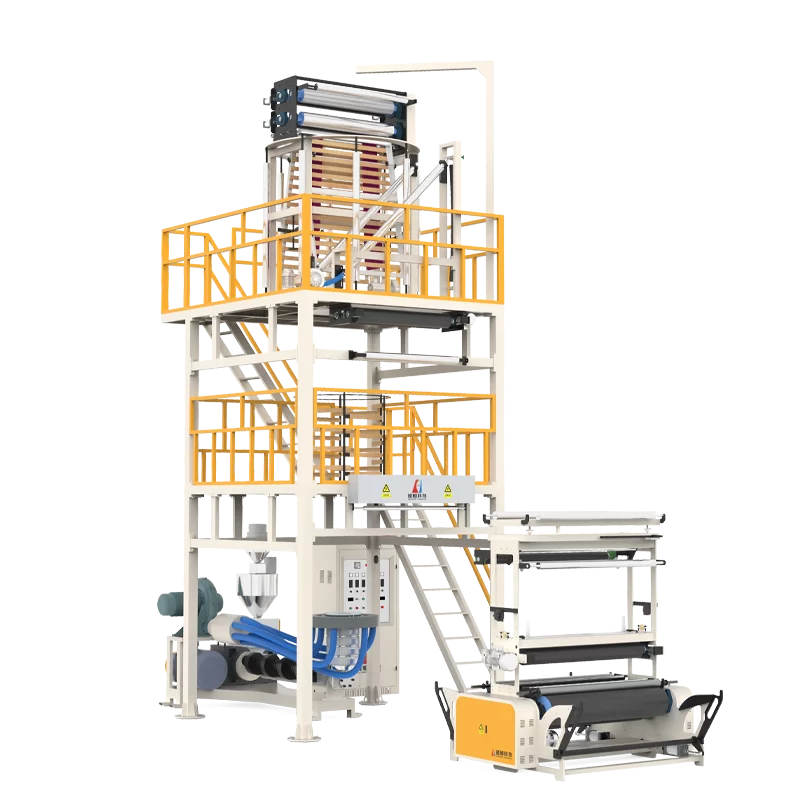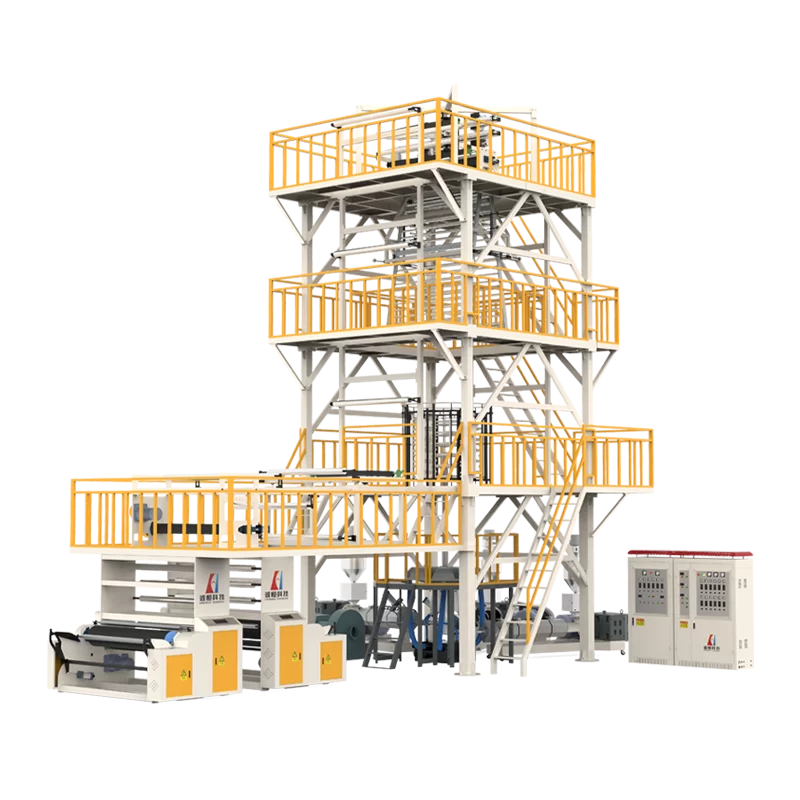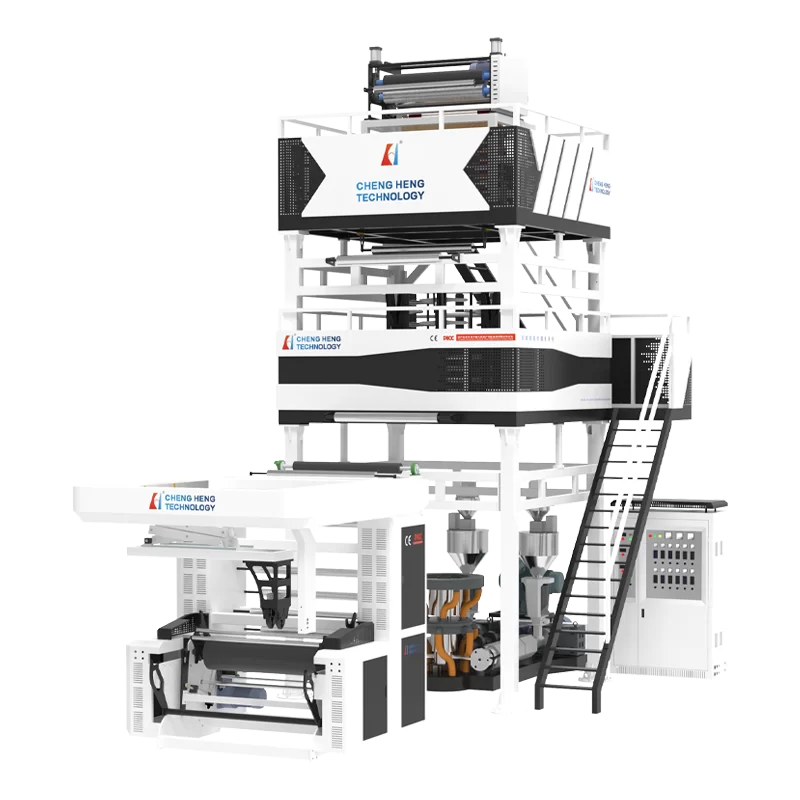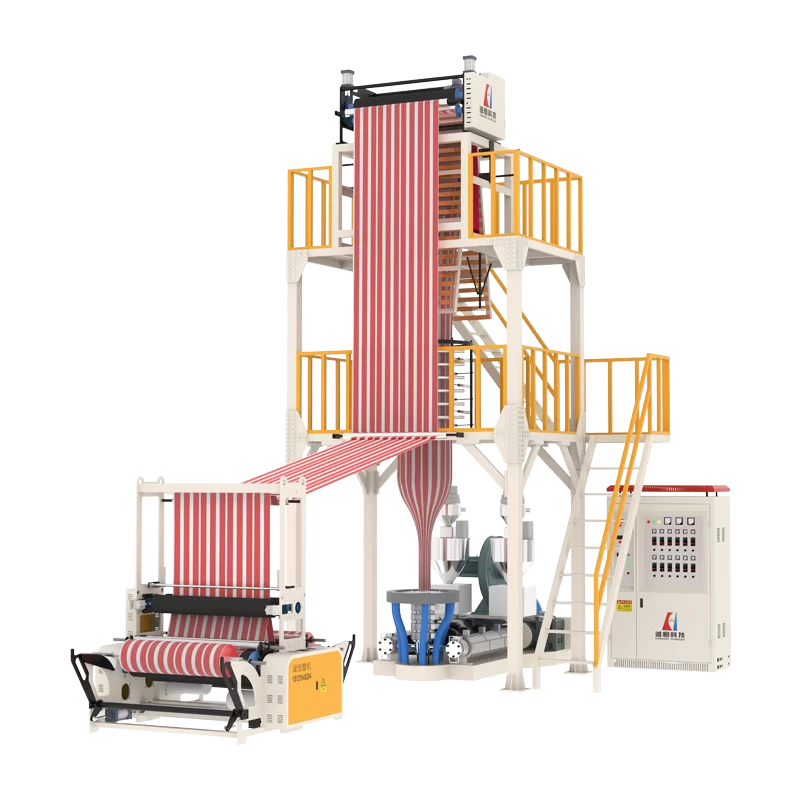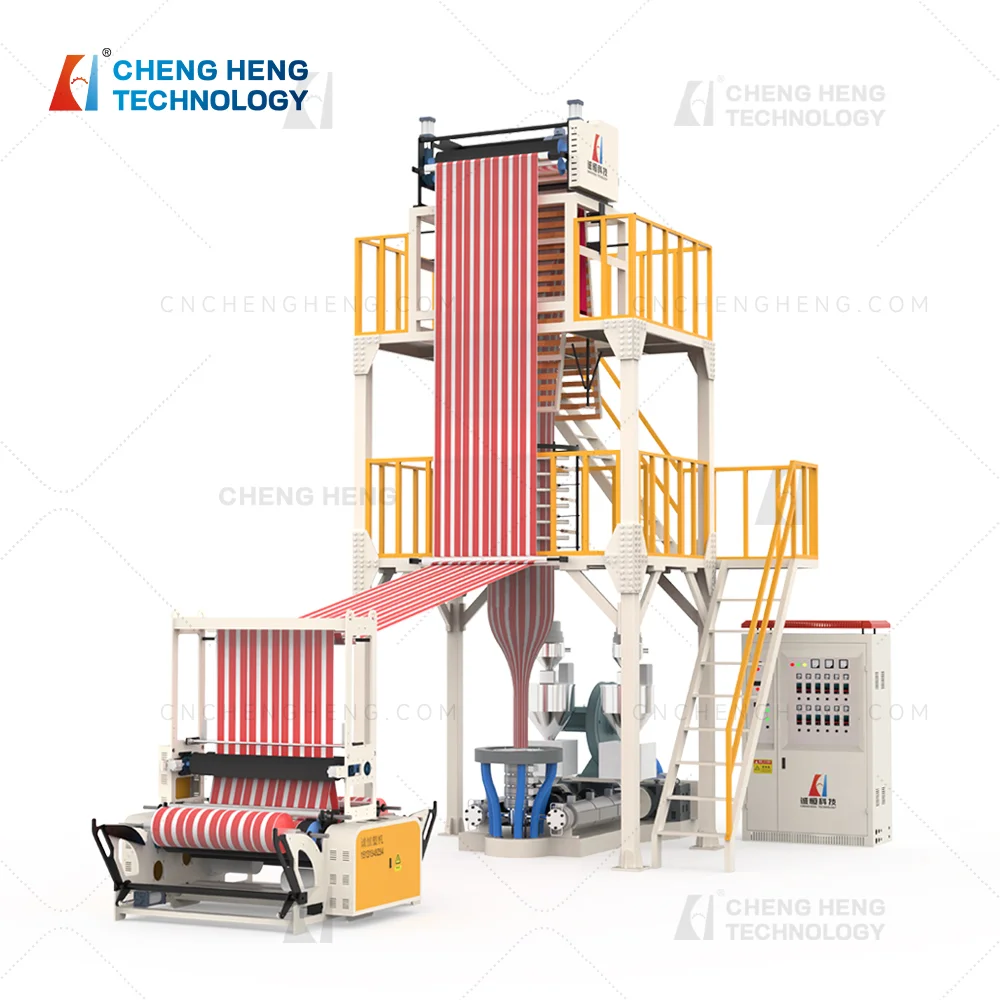
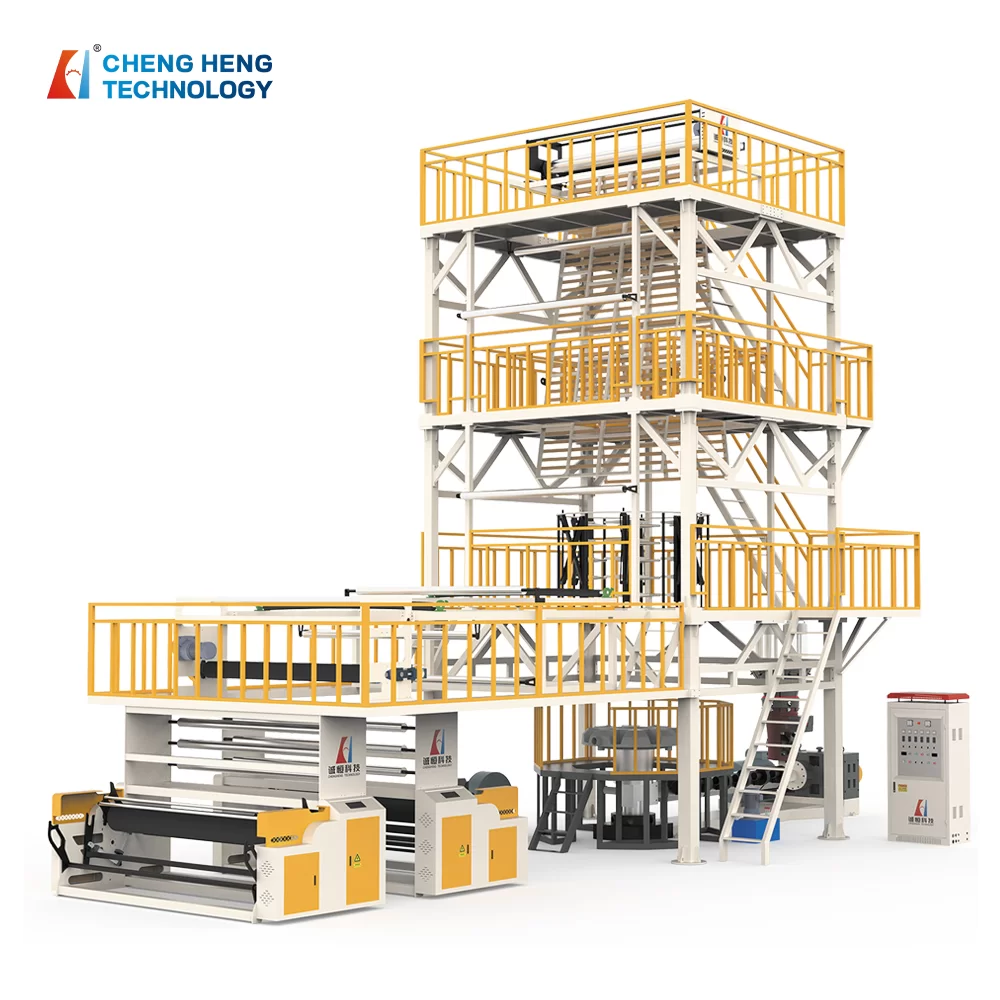
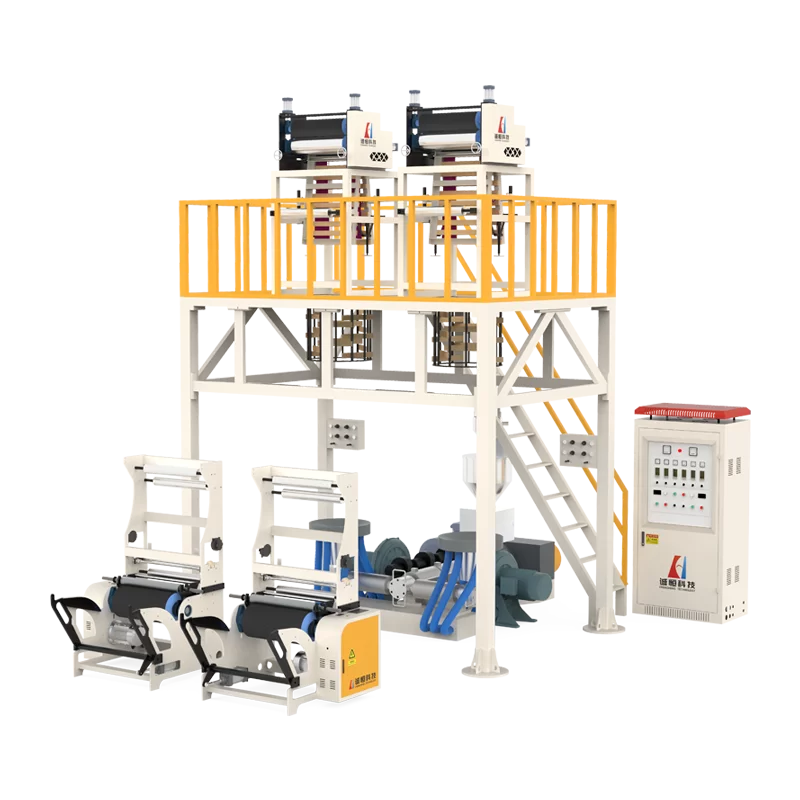
A blown film line is a complete manufacturing system used for producing plastic films through the blown film extrusion process. It consists of several key components: an extruder, die, air ring, bubble stabilization system, haul-off rollers, and winder. The polymer resin, usually polyethylene (PE) or other thermoplastics, is melted in the extruder and forced through an annular die to form a tubular film. Air is injected through the die to inflate the tube into a bubble, which is then cooled, stabilized, and wound onto rolls.
The blown film production line allows manufacturers to produce films with controlled thickness, width, and mechanical properties. Depending on the application, the line can be configured for single-layer or multilayer film production. Multilayer lines, such as 3-layer or 5-layer lines, are widely used to combine different polymers for barrier, sealing, or mechanical strength properties.
Advantages of a blown film line include its ability to produce biaxially oriented films, which improves tensile strength, elasticity, and optical clarity. The blown film production line is also highly versatile, supporting a wide range of film applications including shopping bags, shrink films, agricultural films, and industrial liners.
Modern blown film lines often include automation features such as in-line thickness measurement, bubble stabilization sensors, and tension control, ensuring high-quality, consistent films. The coordination of all components in a blown film production line is essential for maintaining bubble stability, preventing defects, and achieving efficient production.
In short, a blown film line integrates multiple systems to transform molten polymer into high-performance plastic films, providing manufacturers with flexibility, efficiency, and precise control over the final product.
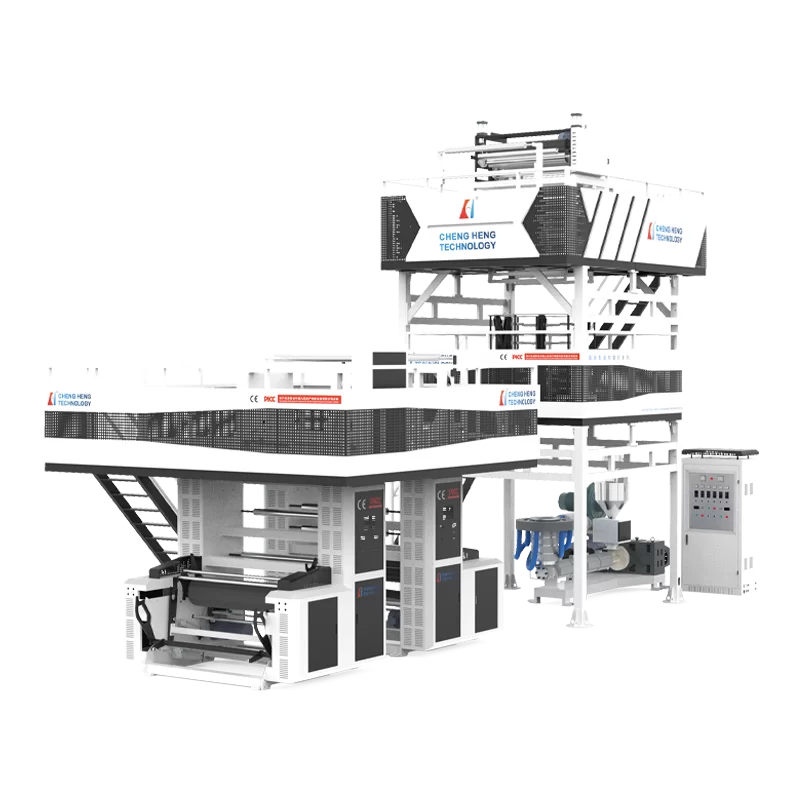
Single-Layer High-Efficiency Film Blowing Machine
-
 CE Certification
 -
 SGS Certification
 -
 ISO Certification
How Much Does A Blown Film Line Cost?
The cost of a blown film line depends on several factors, including production capacity, number of layers, automation level, and manufacturer reputation. Small-scale, single-layer blown film production lines suitable for low-volume production can range from $30,000 to $100,000. These lines are ideal for producing standard polyethylene films for packaging or agricultural use.
Multilayer blown film lines, such as 3-layer or 5-layer configurations, are more expensive due to the additional extruders, co-extrusion dies, and control systems. The price depends on production capacity, level of automation, and technical specifications.
Other factors influencing cost include the type of polymer processed, desired film width and thickness, and the level of technical support and training provided by the supplier. Installation, operator training, and maintenance also contribute to the total investment.
Investing in a blown film line is not only about initial cost but also about long-term efficiency and reliability. High-quality blown film production lines reduce material waste, improve product consistency, and enable faster production, offering better return on investment.
In conclusion, the price of a blown film line varies widely based on specifications, capacity, and technology level. Understanding production requirements and selecting the right blown film production line ensures both optimal performance and cost-effectiveness.
What Is The Frost Line In Blown Film Extrusion?
In blown film extrusion, the frost line is the point along the tubular film bubble where the molten polymer solidifies and changes from a transparent or molten state to a solid, opaque state. It appears as a visible frosted area on the bubble. The position of the frost line is a critical parameter monitored in a blown film line or blown film production line.
The frost line is influenced by several factors, including polymer type, extruder temperature, air ring cooling, bubble diameter, and haul-off speed. Maintaining a stable frost line ensures uniform film thickness, mechanical strength, and optical clarity. If the frost line is too low, the polymer solidifies prematurely, potentially causing brittle films or surface defects. If too high, the polymer remains molten too long, leading to bubble instability, uneven thickness, or wrinkling.
In a blown film production line, operators adjust the air ring, extruder temperature, and haul-off speed to control the frost line. In multilayer extrusion, controlling the frost line ensures proper adhesion between layers and prevents delamination. The frost line also affects film orientation because polymer molecules stretch and align as the bubble expands and solidifies. Proper frost line control results in biaxially oriented films with improved tensile strength, elasticity, and barrier properties.
Modern blown film lines often include visual sensors or cameras to monitor the frost line in real time. Automated systems can adjust cooling or haul-off parameters to maintain consistent film quality, which is essential for high-speed production.
In summary, the frost line is a key indicator in a blown film line, representing the transition from molten to solid film. Controlling it is essential for producing high-quality, uniform films with desired mechanical and optical properties.
How To Eliminate Wrinkles In Blown Film Extrusion?
Wrinkles in blown film extrusion are a common problem that affects both appearance and mechanical performance. They often occur due to uneven bubble inflation, improper cooling, or mismatched haul-off speeds. Eliminating wrinkles requires careful adjustment of a blown film line or blown film production line.
A major cause of wrinkles is uneven bubble tension. If air pressure fluctuates or the bubble diameter is inconsistent, the film may collapse or form wrinkles. Maintaining stable air pressure and proper die gap settings helps stabilize the bubble. Another factor is haul-off speed. If the film is pulled too quickly or too slowly, tension differences cause wrinkling. Adjusting the speed of haul-off rollers to match bubble expansion is essential for smooth winding.
Cooling imbalance is another key factor. Uneven air ring cooling can result in differential shrinkage across the bubble, creating wrinkles. Optimizing air flow, air ring alignment, and extruder temperature ensures uniform solidification. Operator skill and machine maintenance are also critical. Misaligned rollers, worn belts, or inconsistent polymer feed can contribute to wrinkling. Regular maintenance, cleaning, and calibration of the blown film production line reduce defects.
Additional techniques include using bubble stabilizers, anti-slip rollers, and tension monitoring devices to improve film uniformity. By carefully controlling these parameters, operators can produce smooth, defect-free films.
In summary, eliminating wrinkles requires attention to bubble stability, haul-off speed, cooling uniformity, and proper maintenance of the blown film line or blown film production line, ensuring high-quality films suitable for packaging and industrial applications.