Extended Producer Responsibility is an environmental policy approach under which producers are responsible for the entire life cycle of the packaging they introduce to the market, including collection, sorting, recycling, and disposal after consumer use.
Unlike traditional waste management systems funded primarily by municipalities, EPR requires businesses to contribute financially and operationally to packaging recovery programs.
The core objectives of EPR include:
Reducing packaging waste generation
Increasing recycling rates
Encouraging eco-design and recyclable packaging
Supporting investments in recycling infrastructure
Promoting a circular economy
As governments seek to reduce landfill use and improve resource efficiency, EPR is becoming a central element of national sustainability strategies.
The implementation of EPR is accelerating worldwide.
Within the European Union, packaging regulations are increasingly aligned with the Packaging and Packaging Waste Regulation (PPWR), which strengthens producer obligations and promotes recyclable packaging design.
In the United Kingdom, the revised packaging EPR system requires obligated businesses to report packaging data and contribute to the full cost of managing household packaging waste. Updated guidance and reporting requirements continued to be released during 2026 as the scheme entered its operational phase.
Several U.S. states—including California, Colorado, Oregon, Maine, Maryland, Minnesota, and Washington—are also rolling out packaging EPR legislation, creating new compliance requirements for companies selling packaged products into those markets.
Across Asia-Pacific, governments are studying or expanding producer responsibility frameworks as part of broader circular economy initiatives.
The overall trend is clear: producer responsibility is evolving from a regional policy into a global business requirement.
Flexible plastic packaging has become one of the fastest-growing packaging formats due to its lightweight design, lower transportation emissions, and excellent product protection.
However, flexible films also present significant recycling challenges because of:
Multi-layer material structures
Mixed polymer compositions
Limited collection infrastructure
Inconsistent recycling technologies
As EPR programs mature, packaging manufacturers are under increasing pressure to develop products that are easier to collect, sort, and recycle.
This transition is driving demand for:
Mono-material film solutions
Recyclable polyethylene packaging
Lightweight packaging structures
Improved material traceability
Higher recycled-content integration
Regulatory compliance alone is no longer sufficient.
To remain competitive, manufacturers must also improve production efficiency while maintaining high product quality.
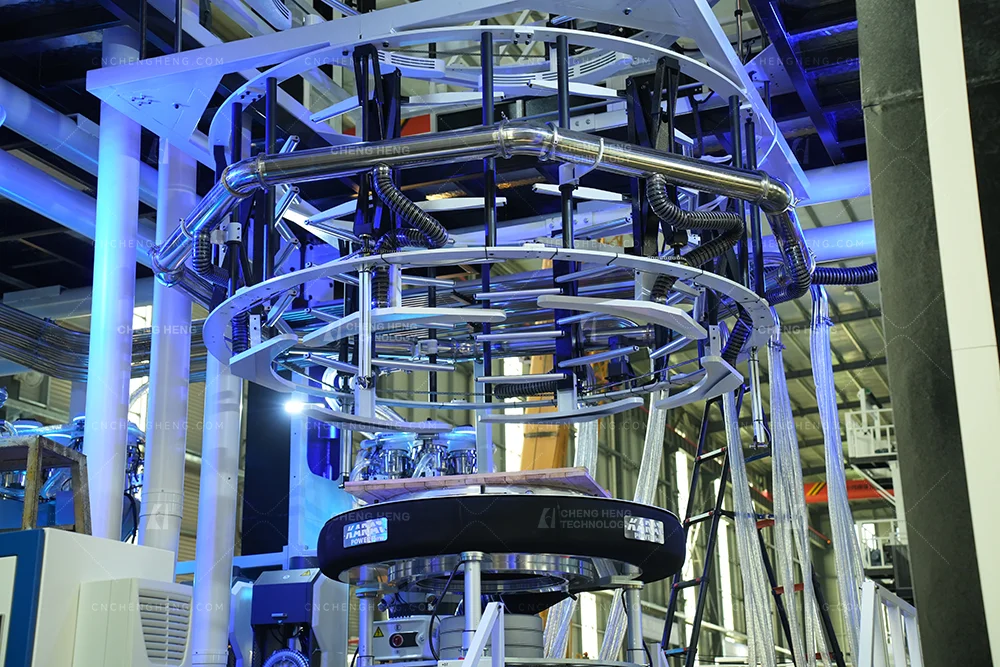
Modern blown film production lines equipped with intelligent automation technologies can help achieve these objectives by delivering:
More consistent film thickness
Reduced raw material consumption
Lower startup waste
Improved process stability
Enhanced production traceability
Automatic air ring systems, online thickness measurement technologies, and intelligent closed-loop process control enable manufacturers to optimize production while supporting increasingly demanding sustainability targets.
As EPR encourages the use of recyclable and recycled materials, maintaining stable processing conditions becomes even more important due to the variability often associated with recycled polymers.
Another important consequence of EPR is the growing importance of packaging data management.
Many producer responsibility programs require companies to report detailed information regarding:
Packaging material types
Packaging weight
Recycled content
Material categories
Annual packaging volumes
As a result, digital production management systems are becoming valuable tools not only for improving manufacturing efficiency but also for supporting regulatory compliance.
The integration of production equipment with manufacturing execution systems (MES), quality monitoring software, and digital reporting platforms is expected to become increasingly common over the next decade.
Although EPR introduces new compliance obligations, it also creates significant business opportunities.
Companies capable of producing high-quality recyclable films with consistent performance are expected to benefit from increasing demand among international brand owners.
Similarly, manufacturers investing in intelligent extrusion equipment and advanced process control technologies will be better positioned to support customers seeking both regulatory compliance and operational efficiency.
Innovation in machinery, automation, and digital manufacturing will therefore become an important competitive differentiator throughout the global packaging value chain.
Industry experts expect EPR policies to continue expanding over the coming years as governments strengthen environmental legislation and circular economy strategies.
Future developments are likely to include:
Eco-modulated producer fees based on packaging recyclability
Greater use of Digital Product Passports
Expanded recycled-content requirements
More harmonized international reporting standards
Increased investment in advanced recycling infrastructure
For packaging manufacturers, adapting early to these regulatory changes may provide long-term commercial advantages while strengthening relationships with multinational consumer goods companies.
Hebei Chengheng Plastic Machinery Technology Co., Ltd. specializes in the design and manufacture of advanced blown film extrusion equipment, automatic air ring systems, online thickness measurement systems, and intelligent process control technologies.
By combining innovative engineering with practical manufacturing experience, the company helps plastic film producers worldwide improve product quality, reduce material waste, enhance operational efficiency, and support sustainable packaging production.
UK Department for Environment, Food & Rural Affairs (DEFRA) & PackUK — Extended Producer Responsibility for Packaging Guidance (updated June 2026).
UK Government — Year 1 Extended Producer Responsibility for Packaging Fees Update (February 2026).
Reuters — New laws force companies to confront most polluting plastics (June 2026).
UK House of Commons Library — Packaging Extended Producer Responsibility (January 2026).