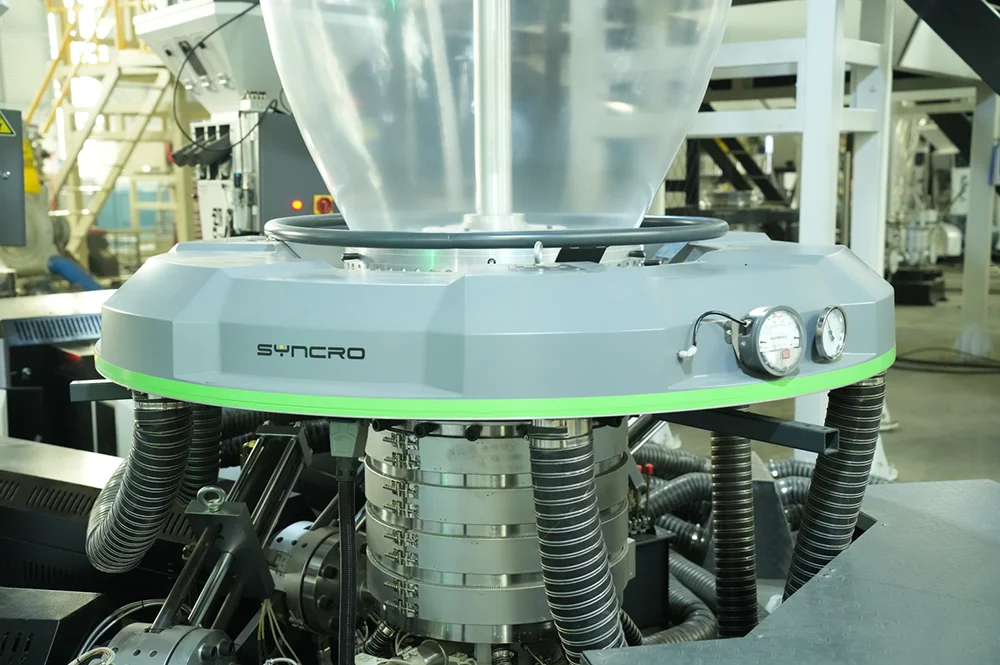
Standfirst: Plastic packaging will no longer be assessed only on whether it pollutes after disposal. What counts now is performance across the entire lifecycle — from raw material selection and structural design to production process and recycling.
On 12 March 2026, the Fourth Session of the 14th National People's Congress adopted the Ecological and Environmental Code of the People's Republic of China. The Code marks a new stage in which China's ecological and environmental protection enters codified governance. For the plastic packaging industry, it is more than a new law: it is a roadmap for industrial upgrading.
Past environmental regulations focused largely on how waste is handled after it is generated. The most visible change in the new Code is that the regulatory view extends forward to product design, production and use.
Part IV of the Code, "Green and Low-Carbon Development", sets out the circular economy principles of reduction, reuse and recycling, while Part II, "Pollution Prevention", strengthens whole-process control requirements. This means the environmental impact assessment of plastic packaging no longer looks only at whether disposal causes pollution; it looks at lifecycle performance — from raw material selection, structural design and production process through to recycling.
This shift in logic aligns closely with the technical direction the industry is already pursuing: recyclable, easy to recycle, and renewable.
01 Degradable — from concept to standard
The Code refers to "degradable" materials in several places, but always ties the term closely to "meeting standards". Article 998, which governs the management of single-use plastic products, refers explicitly to "alternative products that are recyclable, easy to recycle, degradable and harmless".
The word "harmless" deserves attention. It means that what the law recognises as degradable is not simply something that "breaks apart", but a material that decomposes under specified environmental conditions and whose degradation products do not cause secondary pollution of soil or water. This sets a higher bar for the industry: degradable material producers must strictly apply national standards and ensure that the environmental performance of their products stands up to scrutiny.
02 Bio-based — from alternative to mainstream
The Code incorporates bio-based materials into the green and low-carbon development support system. Article 133, on the "ecological and environmental protection industry", provides the policy basis for research, development and promotion of bio-based materials.
Notably, the Code does not simply equate bio-based materials with environmentally friendly materials; it emphasises their environmental performance across the full lifecycle. The clean production requirements in Article 960 also apply to bio-based material production — even with renewable feedstock, energy consumption must be controlled and pollution reduced. The competitive advantage of bio-based packaging must therefore ultimately rest on technological sophistication, not on the "bio-based" label alone.
03 Green packaging — from advocacy to regulation
Articles 973 and 974 set explicit packaging requirements: comply with mandatory standards limiting excessive packaging, reduce the use of packaging materials, and give priority to reusable and easily recyclable packaging.
Of particular note are the specific provisions for key sectors such as e-commerce, express delivery and food delivery. These are the main application scenarios for plastic packaging, and the Code requires these sectors to establish reporting systems on packaging use and recycling. In future, customers of plastic packaging companies — brand owners and platform companies — will impose more formal environmental requirements on upstream suppliers, pushing packaging manufacturers to accelerate their green transition.
Faced with the Code's implementation, plastic packaging companies need to think not only about "how to avoid penalties" but about "how to capture new opportunities".
Product design needs environmental considerations built in upfrontThe Code emphasises source reduction, which means lightweight and functional packaging design will become a competitive focus. Companies that can cut material use while maintaining performance will gain advantages on both cost and environmental grounds.
Material selection needs a systematic approachWhether degradable or bio-based, the Code stresses lifecycle management. When choosing a material path, companies need to weigh raw material sourcing, production processes, application scenarios and disposal routes together, and build a complete environmental loop.
Supply chain collaboration becomes mandatoryThe Code requires brand companies to build green supply chains, which will lead downstream customers to screen suppliers. Packaging companies with environmental certification, the ability to provide carbon footprint data and recycling system support will gain more bargaining power in the restructuring of supply chains.
Information disclosure becomes the new normalChapter IX of the Code is devoted to information disclosure and public participation, requiring companies to disclose environmental information in accordance with the law. Proactively embracing transparency and accepting oversight will become the common choice of industry leaders.
Implementation of the Code will undoubtedly bring an adjustment period: standards have yet to be refined, supervision has yet to mature and the market has yet to adapt. But in the longer view, the institutional framework the Code establishes provides exactly the certainty that the sustainable development of the plastic packaging industry needs.
Environmental protection is not a burden; it is an integral part of product value. Compliance is not the endpoint; it is the necessary path to high-quality development. Let us grasp this new legal starting point together and move the plastic packaging industry towards a greener and more vibrant future.
Source: Plastics Packaging Professional Committee of the China Packaging Federation, published via 86pla.com (Plastics Machinery Network) on 18 March 2026. Original article: 从法典到实践:塑料包装绿色转型的法治新起点. This article is an industry commentary and does not constitute an official interpretation of the Code.